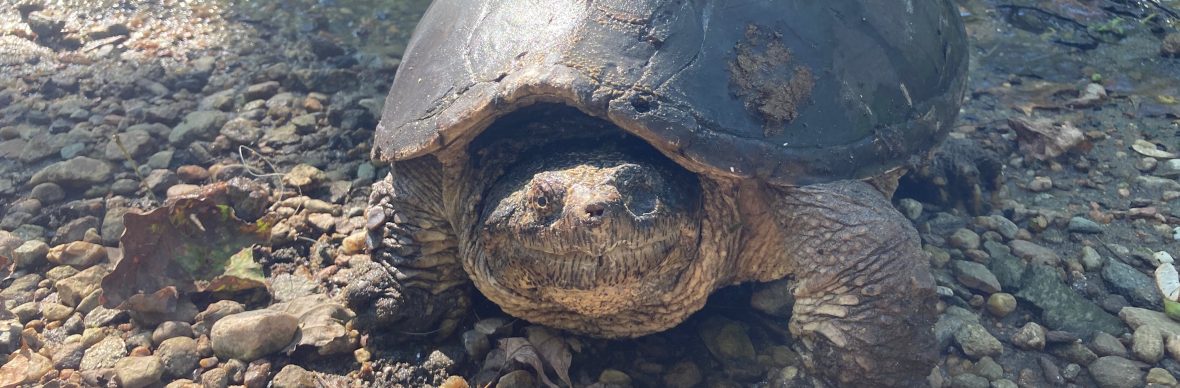

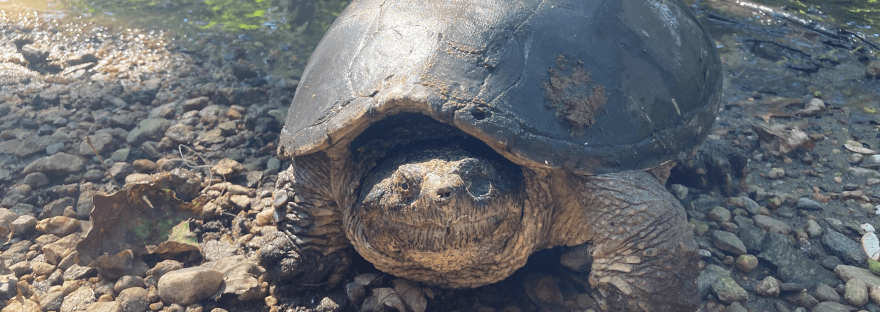
In Norse mythology, Freyja is the goddess of death and fertility, and is also a fierce warrior. This girl is the embodiment of that goddess in turtle form, and a true survivor.

It started one Memorial Day weekend, when I was heading out to a friend’s BBQ, and I get a call from a fellow rehabber who’s out of town and asked if I could take an injured snapping turtle. I say yes, get my turtle kit ready, and get in my car. I ask for the finder’s information so I can coordinate logistics. I’ll abbreviate all the back-and-forth between me, the finder, and the other rehabber, but basically, here’s the situation:
A snapping turtle was laying eggs in a field and got run over by farming equipment mid-laying. The people who found it put it under a weighted-down basket on their front porch and then left for their own social event, calling a rehabber however-long later, expecting that someone would drive the 1.5 hours to their house to get the injured animal, which they had contained improperly. Essentially, they trapped this injured animal outside in the heat without anything to stop flies from getting at her open wounds. My fellow rehabber put the fear of God into them and convinced them to go back for the turtle and drive it to wherever the hell I told them to.
Given the timeline, I decided to have them meet me at my friend’s BBQ with the turtle (with permission from my friend to give out her address). This way, I’d have made an appearance at the party and I could leave with the turtle partway through whenever they got there with her. I brought extra fluids to administer there so that she would survive the trip home; given how long she had been trapped in the heat, and after losing god-knows-how-much blood, she was certainly going to be dehydrated. After an hour or so at the party, I get a call that the finders have arrived with the turtle.
While my expectation was to just administer fluids and leave to treat the turtle at home, that is not what happened. This turtle was horrifically injured, and given what I knew about her situation already, I was surprised she was still alive. I’ll spare the visuals on this one from before she was patched up, but she had one of the worst injuries I’d ever seen a turtle have, nevermind be able to walk away from. She had cracks in multiple places on her carapace (top shell), plastron (bottom shell), and bridge. She had multiple exposed internal organs that were trapped and being pinched between pieces of broken shell. And miraculously, she was still laying her eggs! She also appeared to have several old injuries that had healed long ago, including missing an eye and a couple claws and having pockmarks and healed cracks on her shell. This turtle had seen some shit.
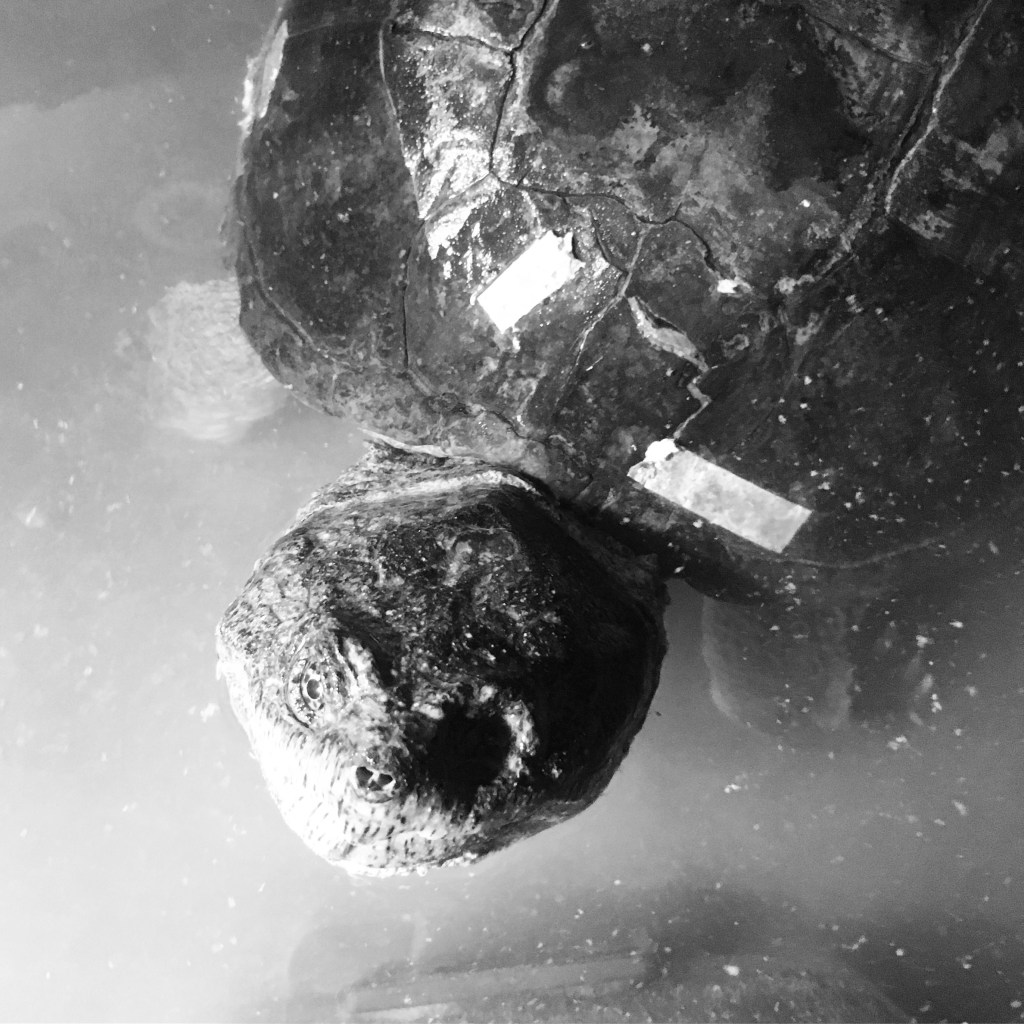
My gracious party hosts, along with all the guests at the party, who knew about my turtle rehabbing and that I was expecting to take in a turtle at the party and leave early, decided that they wanted to help. So, we treated her right there in the backyard, with all the party guests temporarily abandoning their food and lawn games to go fetch towels and water and paper towels and several of them were even game to help me patch her up. “Hold this here. Okay, now move your hand away. You, keep that towel over her head. I need more water. Hand me that syringe. You, cut strips of tape. You, pass me that glue. Here, hold this for a minute. I need a container for these eggs. I need another pair of hands holding her still.” Etc.
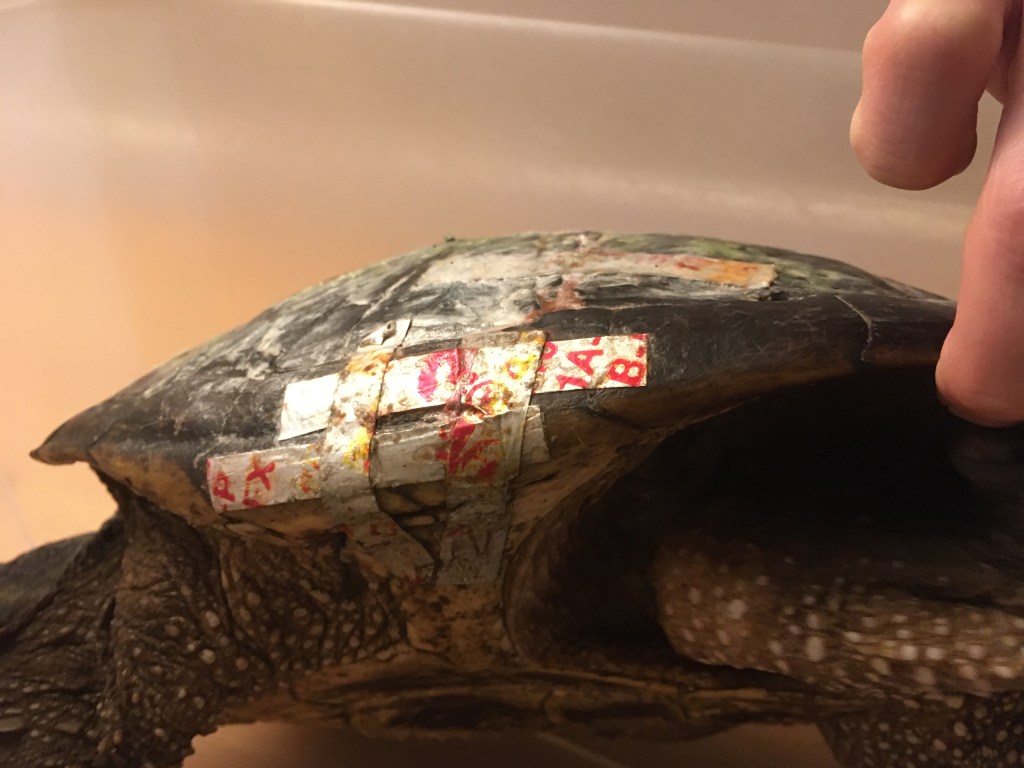
It took several hours, but we got the fly eggs and maggots off and out from her wounds, placed her internal organs back inside her body cavity, stabilized her shell, and hydrated and medicated her. This was no easy feat, especially since she was fighting us the whole time. Despite her grave injuries, she was still struggling and trying to bite. Once finished, we put her in a covered container I had brought along for the purpose and let her rest in the cool, dark, and quiet basement away from the party activity and scorchingly hot sun. We all cleaned up and went back to the party. That turtle was the only thing everyone wanted to talk about. I didn’t know most people who were at that party very well aside from the hosts, but when a group of near-strangers tackles an emergency together, it kind of feels like you’ve known them for a long time.
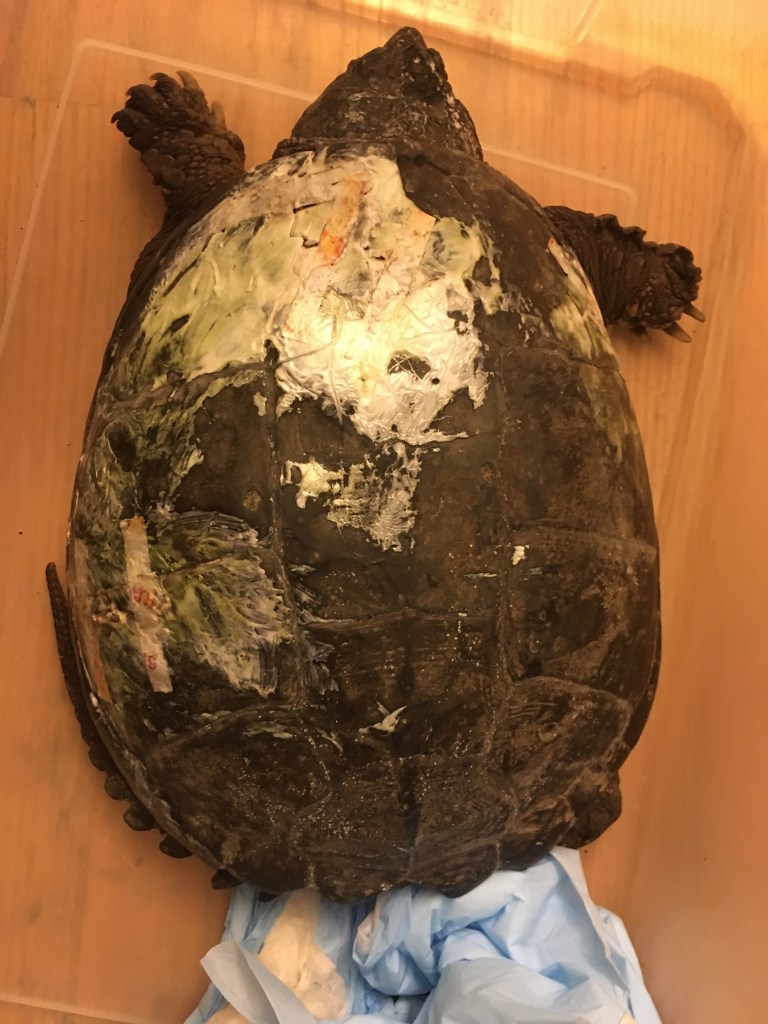
After the party, I got her home, and her injuries were so severe, I was honestly expecting her to have died before the party finished. I was relieved that she didn’t, especially because I didn’t want all those people who had helped her to experience the worst part of rehabbing: when a patient dies. When that happens, it feels like all of your efforts were wasted. In reality, it’s always worth it to try. They die in less pain and suffering once treated than they would have otherwise, and at least they have a chance of survival, which otherwise they would not. Still, it’s not something I was eager to inflict upon a group of good samaritans.

I tend to name my patients, but not until they’ve survived for at least a week, because I try to maintain some level of clinical detachment during the most critical early stage when they’re most likely to succumb to their injuries, which is harder if the turtle has a name. Every day, I would go to check on this girl, thinking this is the day I would find her limp and lifeless. Instead, every day, I would find her resting, but as soon as I approached, she hissed and snapped at me. After a week, my friend whose party the turtle crashed got the honor of naming her, and she chose Freyja. This is the absolute perfect name for this turtle.
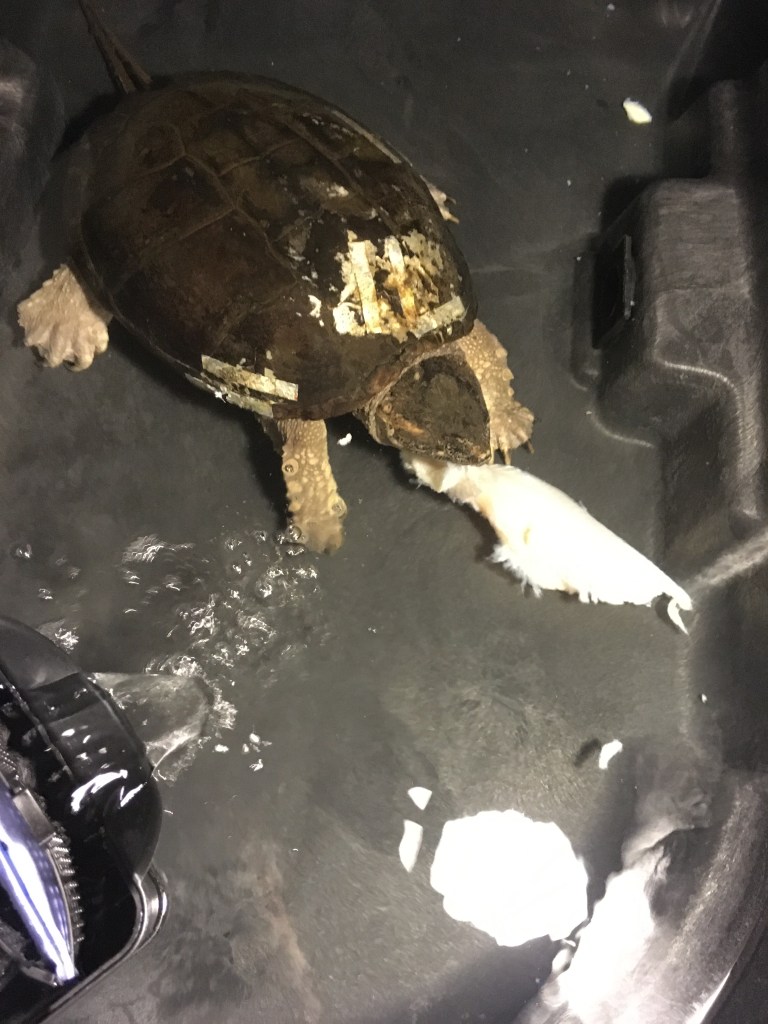
Throughout her recovery, Freyja was a spitfire. As soon as she was well enough to move, she was clawing at her tank trying to escape. She had to have an extended dry-docking and hand-hydrating phase because of how deep and extensive her injuries were, which did not help her attitude (aquatic turtles tend to feel much more comfortable in rehab once they are in a bit of water). She also was on medication for longer than usual, which you can imagine was a joy to administer to a 14-lb snapping turtle who’s out for blood. She also continued to lay eggs for a couple weeks into her rehab stay. Unfortunately, none of them were viable. Sometimes the trauma that lands the mother in rehab is enough to destroy the eggs inside her as well. Given how torn up she was, I can’t say as I’m shocked.
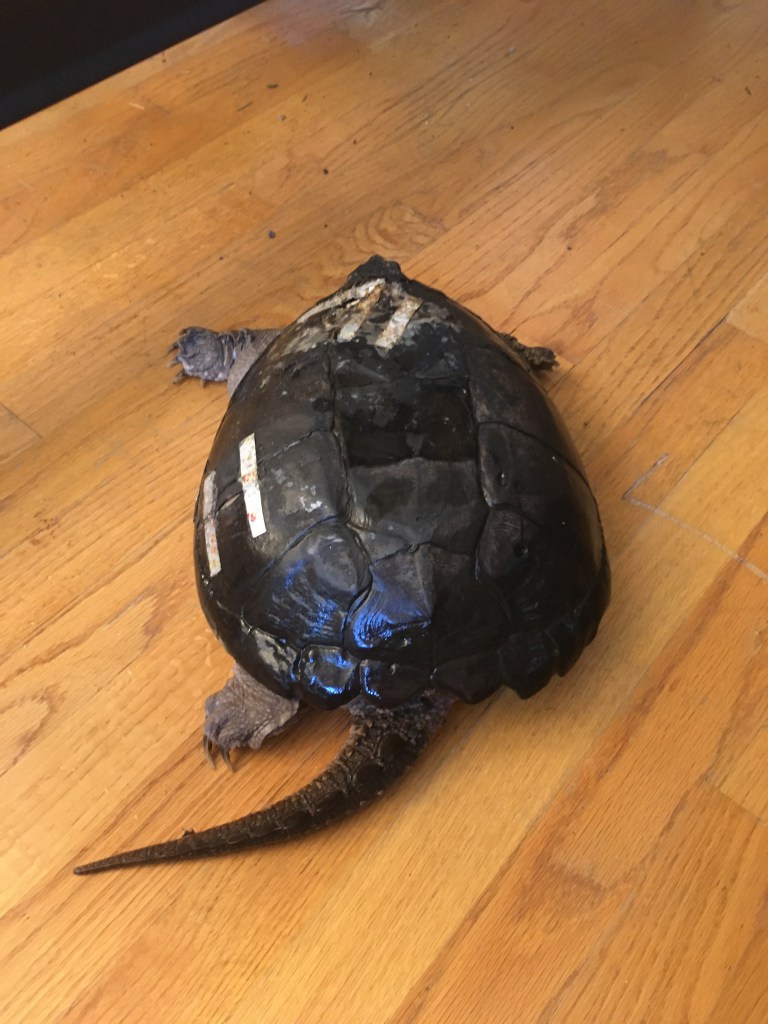
Once she was water-tight, she calmed down a bit. Each milestone she hit in her recovery was cause for celebration. After several weeks, she was able to eat, and this is another tenuous time in rehab. Turtles can go weeks or even months without eating as long as they’re hydrated. When animals come into rehab, they’re in shock and can’t process food anyway, so we don’t feed them right away. Once they’re able to eat, the previously-inactive organs and body processes get going again, and it’s not uncommon for this to be the time that patients die. It’s like having a car sitting in the driveway: it ran fine last time and it looks okay, but once you drive it again, you become aware of all the things that leak on it. Unlike the theoretical car in the driveway, there’s not much that can be done when internal organs “start up” again if they “leak”. They either work and the turtle lives or they don’t and the turtle dies. It’s an immense relief the first time a turtle poops in rehab after she starts eating again, because it’s a sign the internals are functioning.
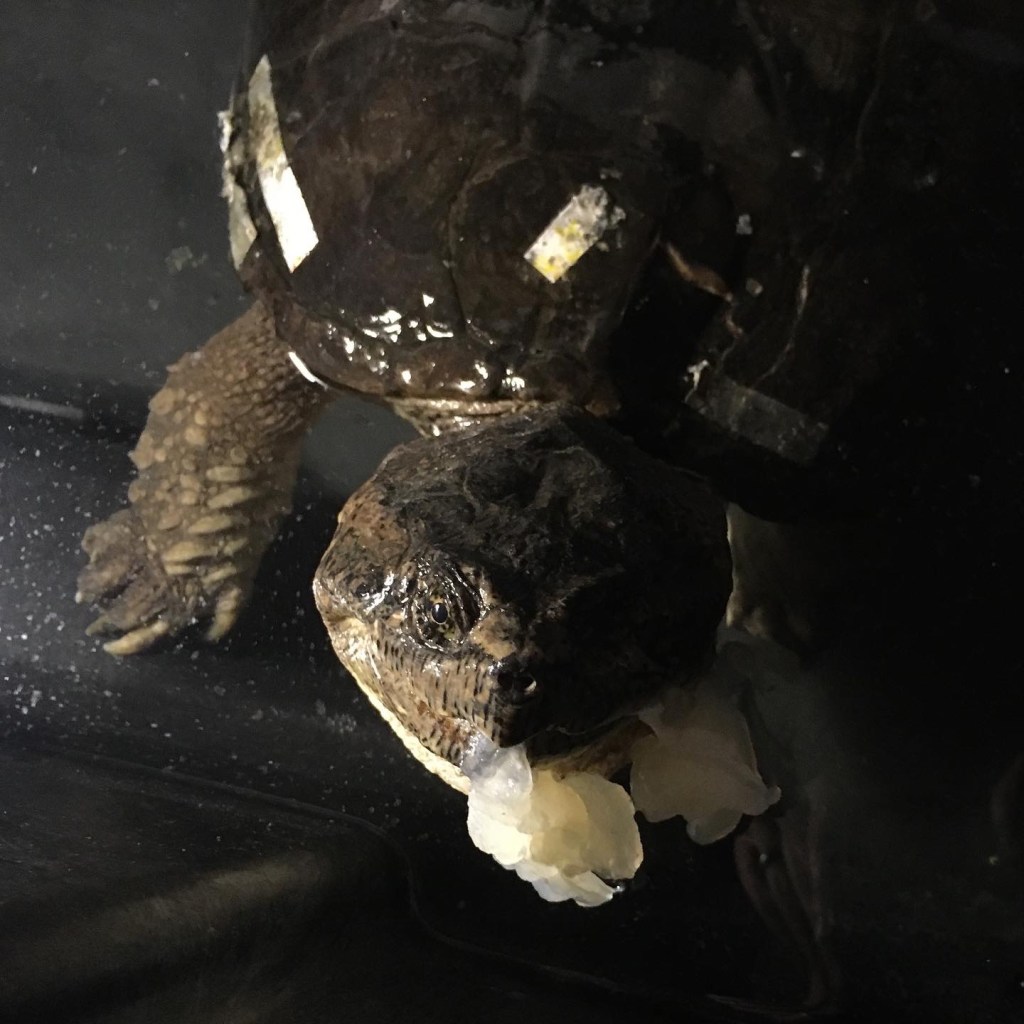
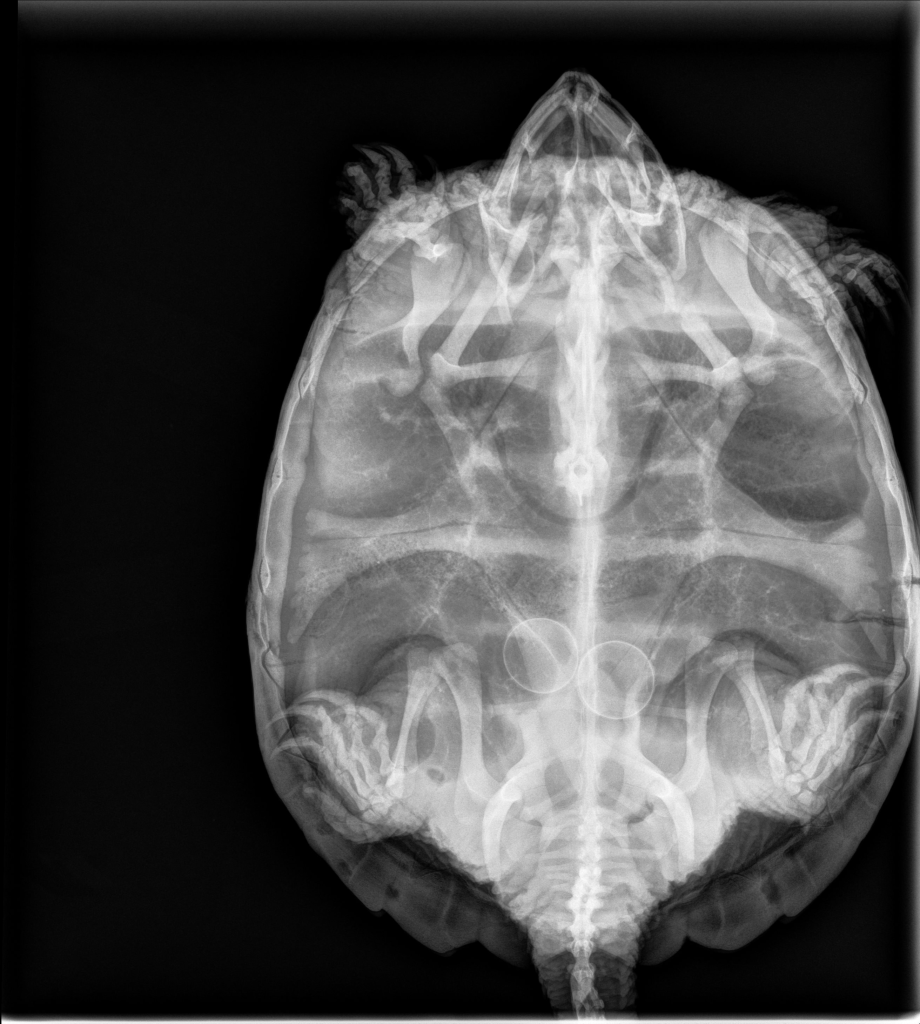
Freyja was with me for a little over a year before she was healed enough to go back to the wild. During that year, she attacked and broke three different filters. She went from hissing and trying to bite when I approached to swimming over and splashing to ask for food, which she eventually learned to take gently from my tongs or delicately grab from the surface of the water. When she was finally ready to go, I took her to the vet to get an x-ray, as a final check that she hadn’t developed any new eggs in the time she had been in rehab, or, worse, still had some stuck from her initial intake. I don’t want to release gravid turtles, because they may not lay the eggs in the wild. The timing and hormonal cues and seasonal cues have all been messed up from being in rehab for so long. And once they’re out there, there’s nobody to check up on them.
Lo and behold, she had two eggs stuck inside her. Now, it is possible to palpate in front of the hind legs to tell if a turtle is gravid, but it’s inexact. If she has a whole clutch, you can tell she’s gravid. But if she has only a couple eggs in a weird spot, it’s easy to miss or to not be sure that’s what it is. Hence, the x-ray. This presents a new problem for me, because the vet I would normally go to for help inducing egg-laying wasn’t taking wildlife anymore this year, and none of the six other vets I talked to would either induce her themselves, provide the medications for me to induce her, or consider any other measures (such as surgery) if she didn’t lay them. Every vet has their own limitations on what they feel they can handle, and many who don’t see turtles or wildlife all the time understandably don’t want to jump in on a complicated case. So, I went to my fellow rehabber who initially referred this patient to me, and she gave me medication to induce her.
After weeks of her in a nesting box, before and after the medication, she wasn’t laying her eggs, just trying to escape. She was miserable out of water, so I took her out of the nesting box and put her back in a water tank while I deliberated what to do. My options at this point were to either release her with the eggs or to bring her to an out-of-state specialty clinic for surgery. Turtles are notoriously bad at anesthesia, and I haven’t had very many patients come back from surgery successfully. Leaving her with the eggs and releasing her into the wild could mean that they rot inside her and cause her to get sick or she tries to lay them and her reproductive organs rupture or prolapse in the process and nobody’s there to help. It’s about 50/50 chance of survival either way. After all that she had been through and all I had done to help her, I did not want to risk losing her to surgery or retained eggs, but I was running out of time and options. Soon it would be too late to release her before winter was on the way. She was getting sick of being in captivity as well, and her good behavior had been replaced by repeated escape attempts (one of them successful).
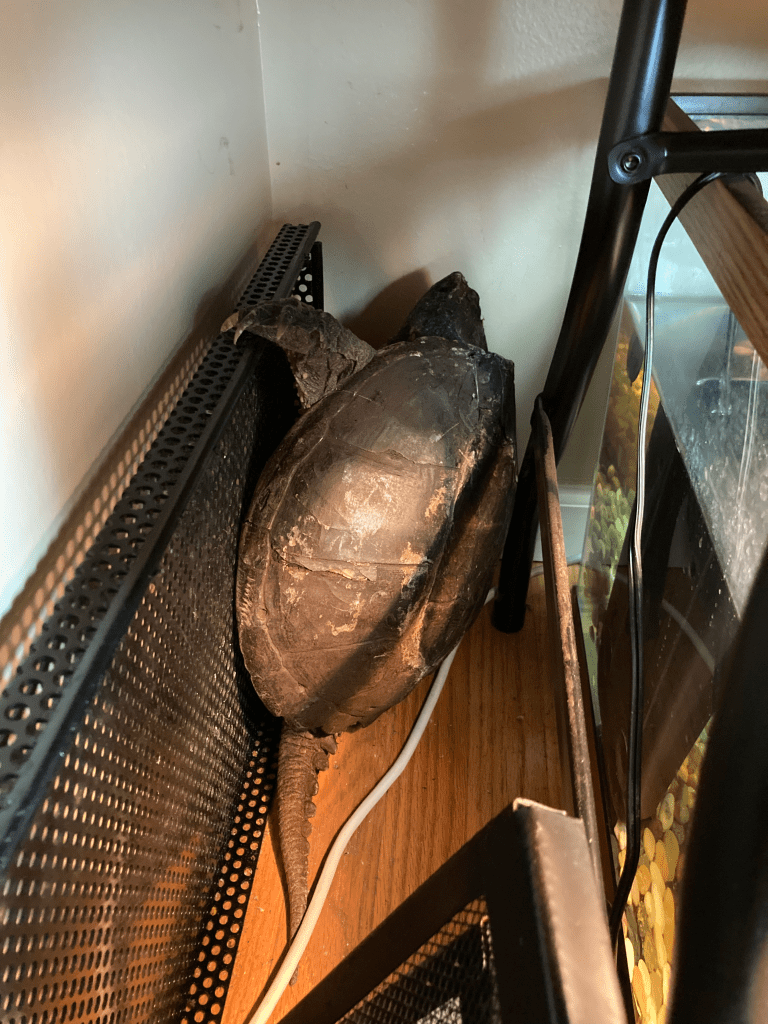
I was about to just say, “Fuck it” and let her take her chances in the wild with those eggs still in her when Freyja pulled off one final miracle.
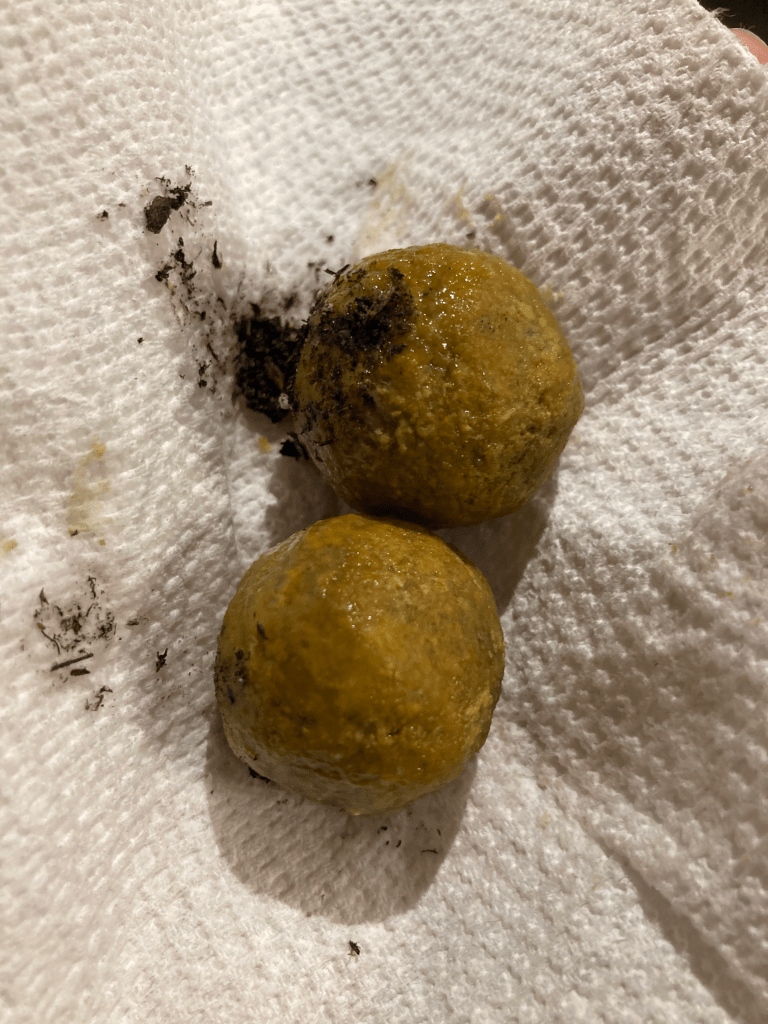
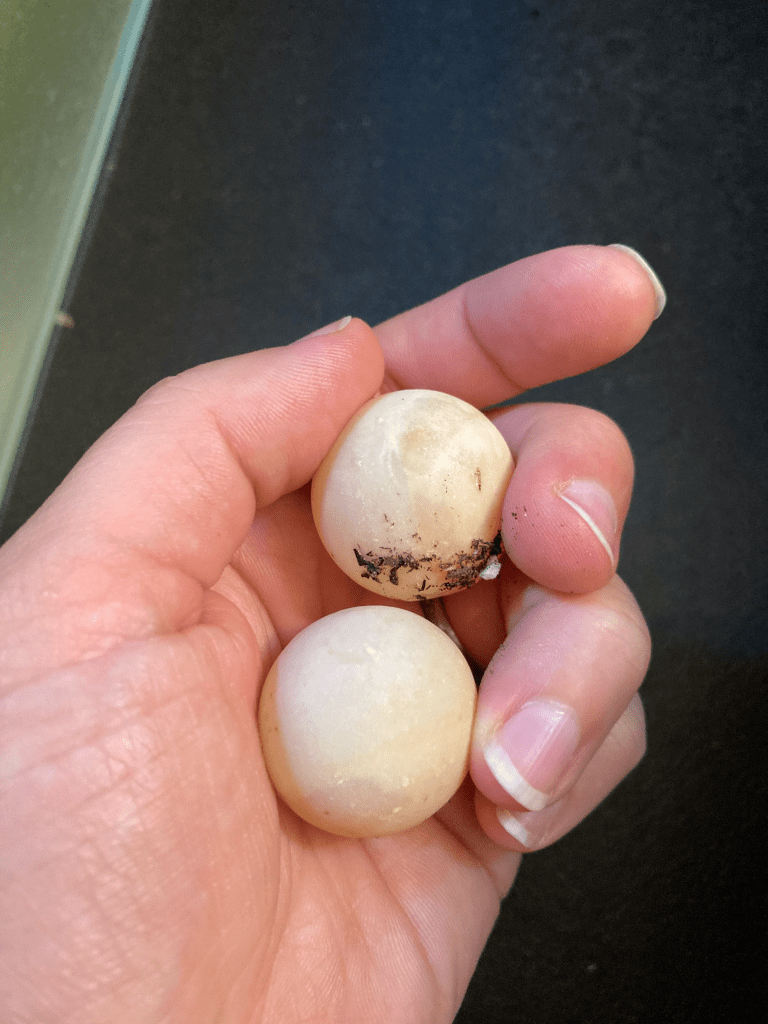
Freyja laid her eggs! These eggs, which she laid in the water, were so calcified and hard that they were barely recognizable. They had been in her for a long, long time, with zero symptoms or problems. They must have finally irritated her body enough to expel them. Afterward, I waited and observed for a few more days to make sure the effort didn’t cause uterine prolapse (when pushing so hard to lay eggs that the uterus squeezes itself outside the body), bleeding, or anything else. Thankfully, she was fine, and she was finally ready to be released with a clean bill of health.
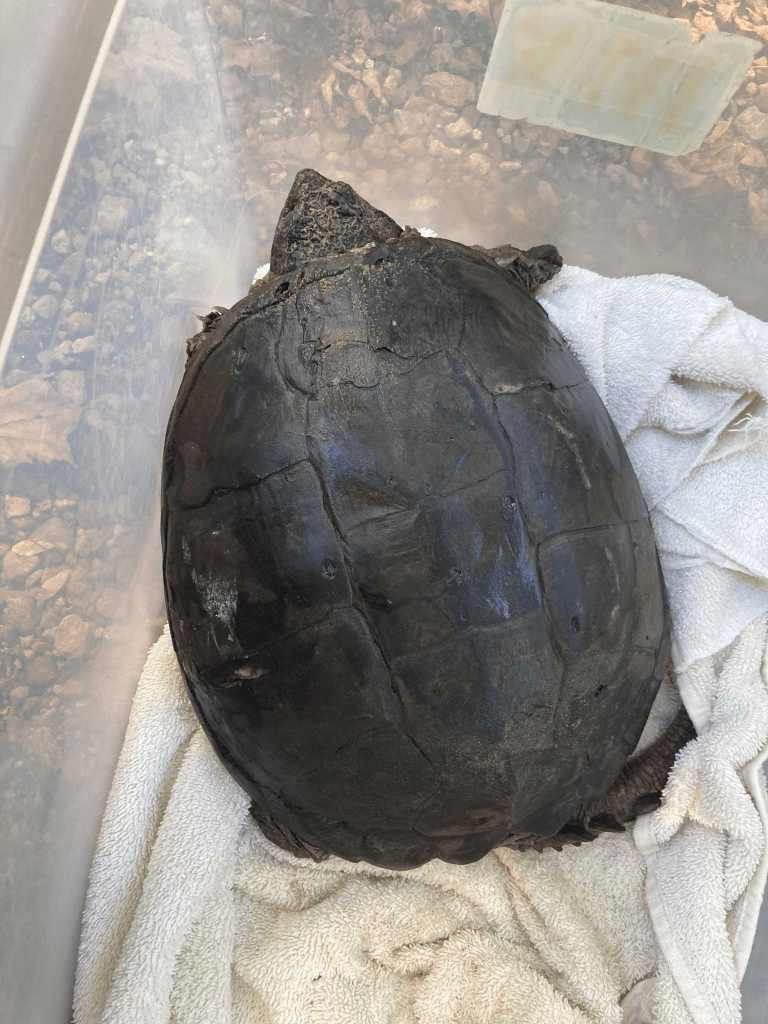

Turtles often feel friendlier if they’re in rehab for a while, mainly because they know where their food comes from and realize I’m not going to eat them, and for a while, Freyja was like this. Towards the end of her stay at Turtle Haven, though, she reverted to her wild side. She was SO ready to go back home.

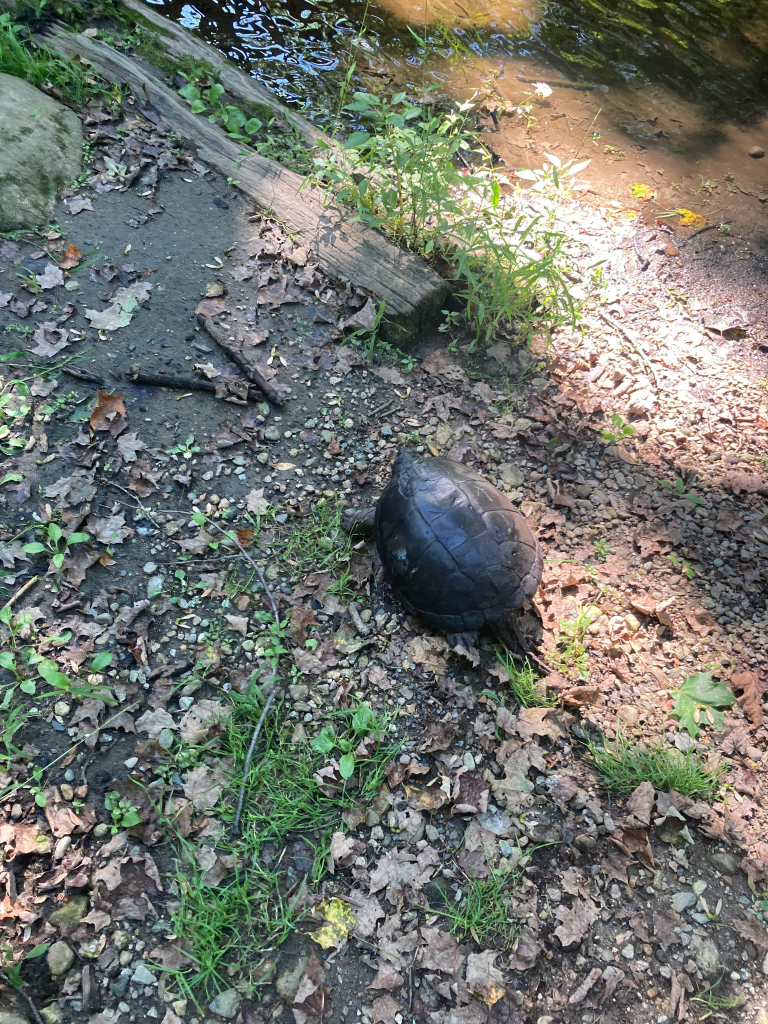
I took her to the preserve that was near the place she was found, with a large river with several connected streams and ponds, her home. When I took her out of her travel box, at first she didn’t go to the water. She instead turned to face me and reared up, hissing. One final threat to show me who’s boss.

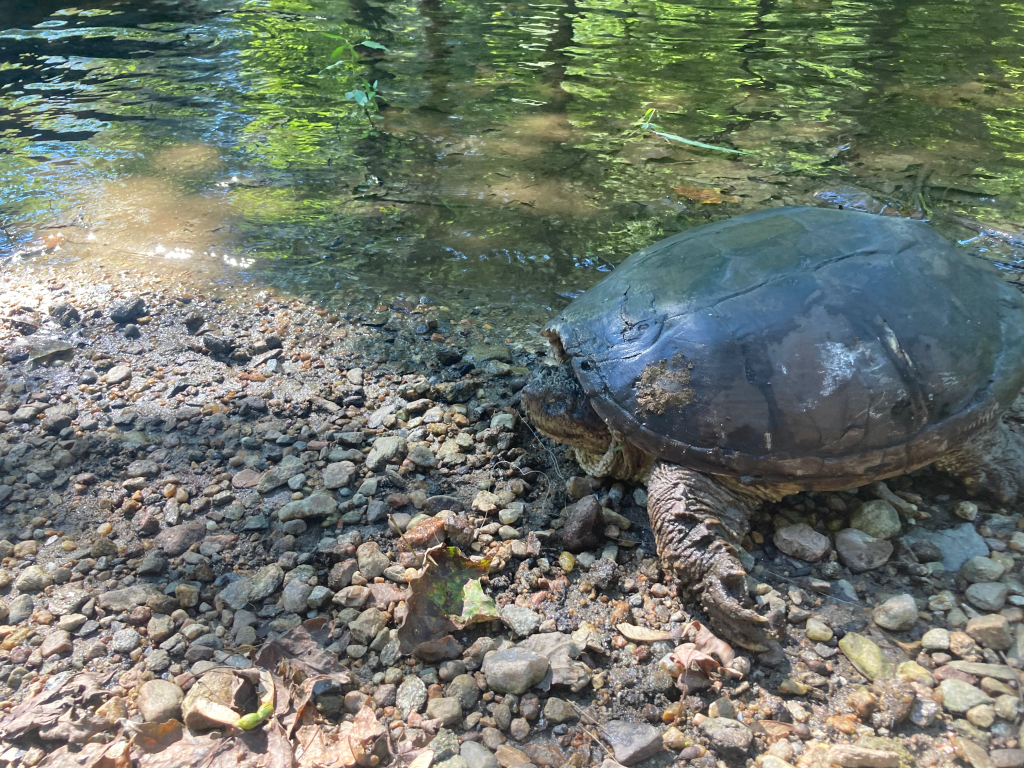
I backed away and when she still didn’t go, I picked her up and put her front half directly into the water. Once she realized she was safe and she was home, Freyja took off immediately and never looked back.
May she live a long and happy rest of her life and I hope, in the best possible way, that I never have to see her again. Farewell, Freyja.

 Turtle Haven
Wow! What an amazing story! I am so glad that you were able to save Freyja and get her back to her home. It must be so hard to see them swim off without even a wave goodbye. Thank you so much for doing this important work! You are an inspiration!
LikeLike