
And that is partly why there are never enough of us to go around. Without safety and social equity for everyone, how can we expect people to make a commitment to wildlife?
These are just my musings on things I have casually noticed in my journey to become a rehabber, completely anecdotal, and not based on hard data. I do use general statistics in this post and I link to my sources, but I don’t have data that is specific to the demographics of wildlife rehabbers nationwide as a separate group. If anyone wants to look up data to refute or confirm, please do so, then email me. Also, this isn’t an accusation against anyone who is a rehabber, just an observation and possible reasons why the field is the way it is. It says more about our society’s values hierarchy than it does about people in wildlife rehab. At the end, I have thoughts on how we can change the climate to make wildlife rehab more inclusive and reflective of our country’s diversity.
In looking at my state’s licensed rehabber list for this year, there are a total of 86 names that are clearly female names, 11 names that are clearly male names, and 5 that could go either way or are listed as full organizations rather than a person’s name. This is an overwhelming majority of women. Now, you can’t really make judgements of a person’s race or age based solely on their name, so I’m not going to try. However, I can tell you that when I went to take my rehabber certification class and test, there were about a hundred people in the room, all potential future rehabbers, and all but maybe 3 of them were white. The gender ratio in the room was probably 85% women. Also, I’m in my 30s and I was probably one of the youngest people there. I went to a wildlife rehabber conference later that year and the demographics only got slightly more diverse. The statistics are similar from what I can glean from social media profiles in rehabber groups I’m in.
Why is that? It’s not like white people inherently care more about animals than other races. Everybody likes animals. It’s one of the few things that are damn near universal. We may not all like the same animals, but people from every continent will go, “Aww!” at a cute animal photo and be saddened when they hear of wildlife getting injured or orphaned (unless you’re a complete psychopath). It’s not like men are incapable of caring for animals (veterinarians used to be mostly male, but the career is now heading in the opposite direction; it is almost balanced, with a small majority, 55%, being women. This presents its own interesting set of challenges and biases which you can read about here.). As to the age difference, again, there is nothing intrinsic that makes you empathize more when you’re older (people start feeling empathy at 2 years old).
So, why does the intersection of age, race, and gender in the wildlife rehabilitation field overwhelmingly favor middle-aged white women? The answer, to completely oversimplify, is money.
In my state and in many other states, being a rehabber is completely a volunteer enterprise. You have to pay for your own training, supplies, medicines, space, etc. Often you can find a veterinarian who will help you out with complex surgeries and the like for free, but they’re not obligated to do this, and some places will charge you for procedures or meds. So, most rehabbers have day jobs, and spend anywhere from hundreds to thousands of dollars on their patients every year (and this isn’t including first-year startup supplies). In order to be making this much extra money, you’ve either got to be making a lot more than minimum wage, or else be married to someone who is. Which group of people are statistically and historically underpaid? According to a variety of research, black and hispanic people are making 87¢ and 91¢ to the white person’s dollar, respectively. And this is within the same job descriptions. Hispanic and black people, for a variety of institutional, cultural, and socio-economic reasons, have less education and occupy lower-paying jobs than white people and Asian people, according to the bureau of labor statistics. So, if you make less money over the course of your lifetime because society is keeping you down, you’re less likely to have the ability to volunteer for anything, let alone pay for things that are extra.
I spent over a decade in poverty and near-poverty due to the impacts of my country’s economic collapse, predatory student loan policies (which I will be paying off for the rest of my life, but that’s another story for another day), and the lack of value society places on my day-job profession. All of the often female-dominated, “caring” professions have extremely low salaries for the essential jobs they perform (nursing, teaching, libraries, child care, any kind of assistant position, etc.). It’s not shocking, then, that wildlife rehab, by definition a “caring” profession, is so undervalued that we’re not paid for it. I’m finally at a point in my life where, despite my six-figure student loan debt, undervalued profession, and graduating into an economic downturn, I am financially stable enough that I have some spending money. After much careful consideration, I decided to spend that money on being a wildlife rehabber. I could be going on nice vacations every once in a while or paying down my debt more, but helping animals felt more meaningful to me. This is not a choice everyone is going to make in their lives, and that’s fine, but the fact is that many people don’t even have extra cash to decide how to spend. And statistically speaking, a lot of those people without extra cash are young, or black, or hispanic.
As a white woman, I will make only 79¢ for a man’s dollar, regardless of how far I advance in my career. If I were black or hispanic, that would be 62¢ and 54¢, respectively. It seems counterintuitive, then, that women make up the majority of a workforce that is all volunteer. One would think that fewer women would be able to afford it. That is where the intersection of age comes into play. People who are middle-aged or older graduated college with very little debt (because college cost much less back then…you could pay for it without taking out loans by working a summer job; this is absolutely not the case anymore). They also graduated into a market where it was easy to find a full-time, well-paying job in their chosen field, and where minimum wage even for non-college-graduates more or less guaranteed that you could make ends meet. None of these things are true for people in my generation. It took me much longer than previous generations to find a job in the first place and then rise through the ranks in my career to a point where I’m not counting every penny. Simply type, “student loan debt crisis” into any search engine and you’ll find hundreds of thousands of articles, studies, and analyses that tell you in no uncertain terms how royally fucked we are.
People graduating college now or in the past 10-15 years simply do not have the financial means to enter into a secondary profession that costs money and time. We’re working one, two, three jobs just trying to keep roofs over our heads and food in our fridges. Some of us are trying, against all logical reasoning, to have children in this financial climate, which gives us even less money and time to spare for orphaned birds or turtles hit by cars or rabbits attacked by cats or what-have-you. It’s no wonder, then, that people getting into volunteering are older. Unburdened by my generation’s debt and lack of job security, baby boomers have time once they’re retired or their kids are grown up and need them fewer hours of the day to volunteer with animals, and they have the financial means to do so. It’s a costly hobby rather than a career choice, which creates barriers to entry for those not fortunate enough to have the money or time to invest in it. More barriers means fewer rehabbers, and it’s the animals that suffer for it.
Even in states where the government supports wildlife rehabbers, or in the few organizations (usually non-profits) that have managed to do enough fund-raising to hire rehabbers, the salaries are staggeringly low. This does not make it a very attractive option for people who are interested in an animal-related career, leading to shortages of wildlife rehabbers and people who just don’t have room for any more intakes. It’s no wonder that every rehabber I’ve ever talked to has at some point experienced emotional burn-out or compassion fatigue. Additionally, studies suggest that men tend to place pay above sense of fulfillment when ranking what is most important to them in a career choice. If we’re not offering a living wage, nevermind a generous one, how do we expect to attract a section of the population that values money? This sense of importance may be tied to the outdated stereotype of men-as-breadwinners, and women’s jobs as “extra”. If men expect to have to be able to “provide for their family”, they’re not going to be able to do it on a rehabber’s salary. If women are increasingly contributing to household finances out of necessity due to rising debts and cost of living increases, they’re not going to be able to volunteer their time and money.
Now that I’ve talked about how not enough rehabbers is actually a social justice issue, is there anything that can be done to fix it? How can we make wildlife rehabilitation attractive to people from all different genders, races, and generations? Simply put, it needs to be a paid profession (eliminate tax breaks for super-wealthy corporations and people if you’re concerned about who will pay for it), with free access to training (i.e. – eliminate college tuition and debt), that gets the respect and representation it deserves in the public eye. We see veterinarians all the time as the go-to animal career choice. When was the last time you saw a rehabber in a book or on TV or visiting an elementary school classroom for career day (or at a college recruiter fair for that matter)? I didn’t even know rehabbers were a thing until I was partway through college. We spend all our time doing what we do, and even though outreach has greatly increased in recent years thanks to the internet and social media, we need to be vocal in our communities, find time to be involved and let people know what we do.
If we want more rehabbers to join our ranks, it is in our best interests to fight for all social justice issues. If rehabbing is to remain a volunteer activity, and we want to attract younger people, cancel student loan debt to make it a possibility. If we want to attract capable men, we need to lobby state, local, and national government officials to fully fund environmental agencies and add rehabbers as a decently paid profession (and also emphasize the problem-solving and expertise aspect of our jobs as much as we do the caring aspect). If we want to attract people of all races, rehabbing needs to not only be financially accessible, but something that everyone knows exists. If people in marginalized groups are busy worrying about their safety on a daily basis due to the color of their skin, their gender, their sexual orientation, their religion, or any other personal attribute beyond their control, they won’t feel empowered enough to help others in need, and they’re also less likely to have had the kind of enrichment program in their lives that rehabbers are doing to promote awareness (mainly because we have to ask for money for these programs to continue operating, and places with more marginalized people in them are less likely to have money to give us). We need to ensure equal access to quality education for all, regardless of zip code. If people of any age, race, or gender are just scraping by financially, they’re not going to have the capacity to care for wildlife as an added responsibility. We need to advocate for a livable minimum wage, and for enforcement of laws and policies that will close the pay gap between men and women, and between all the races. We also need to examine biases in society. If a rehabber is responding to a call at night, who is more likely to get pulled over in an unfamiliar neighborhood while they’re driving slowly searching for an address marker? If a rehabber is trapping, or releasing, an animal in public, therefore carrying around some kind of out-of-place equipment and likely in a park, who is more likely to have the police called on them for no reason? And who is more likely to get out of those police encounters unscathed?
We as rehabbers did not create the lopsided demographics in our community. However, by recognizing the forces that led to our current situation, and realizing how all of society’s major problems are entwined, we can do our part to help fix it. Nobody’s asking for fewer rehabbers on the basis of your age, gender, or skin color. We need all the rehabbers we can get, and we need equity in other areas of society to add to our ranks and get us there.
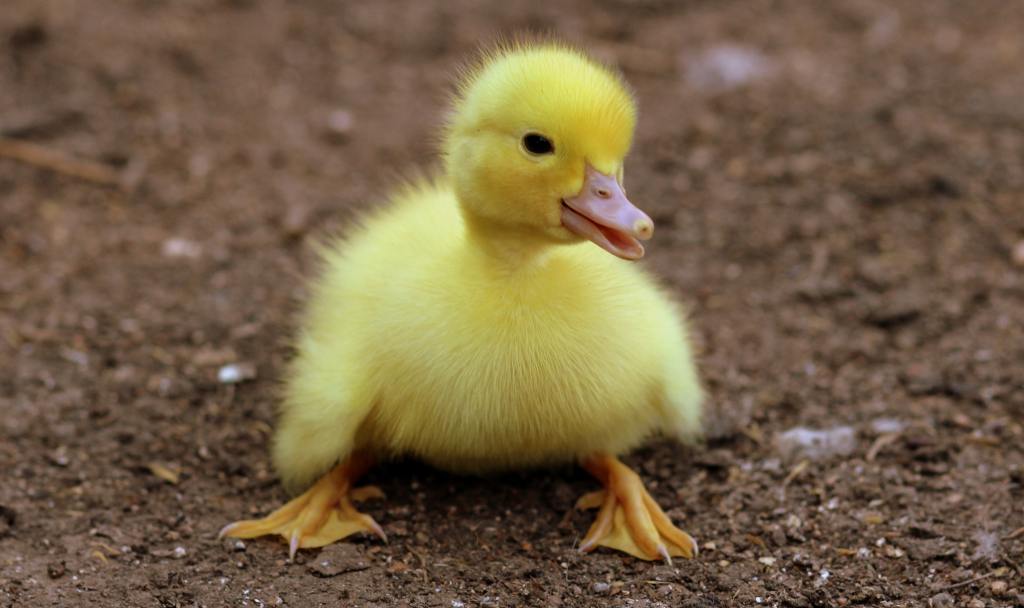
And if you’ve made it this far, here’s a picture of a cute duckling to make you smile.

 Turtle Haven
Rehabber demographics do dovetail with societal inequalities. Electing diverse local politicians floats these types of candidates upwards to later run as representatives and senators, which I can dream should help equal-pay legislation. Interesting read; also thanks for the duckie!
LikeLike