

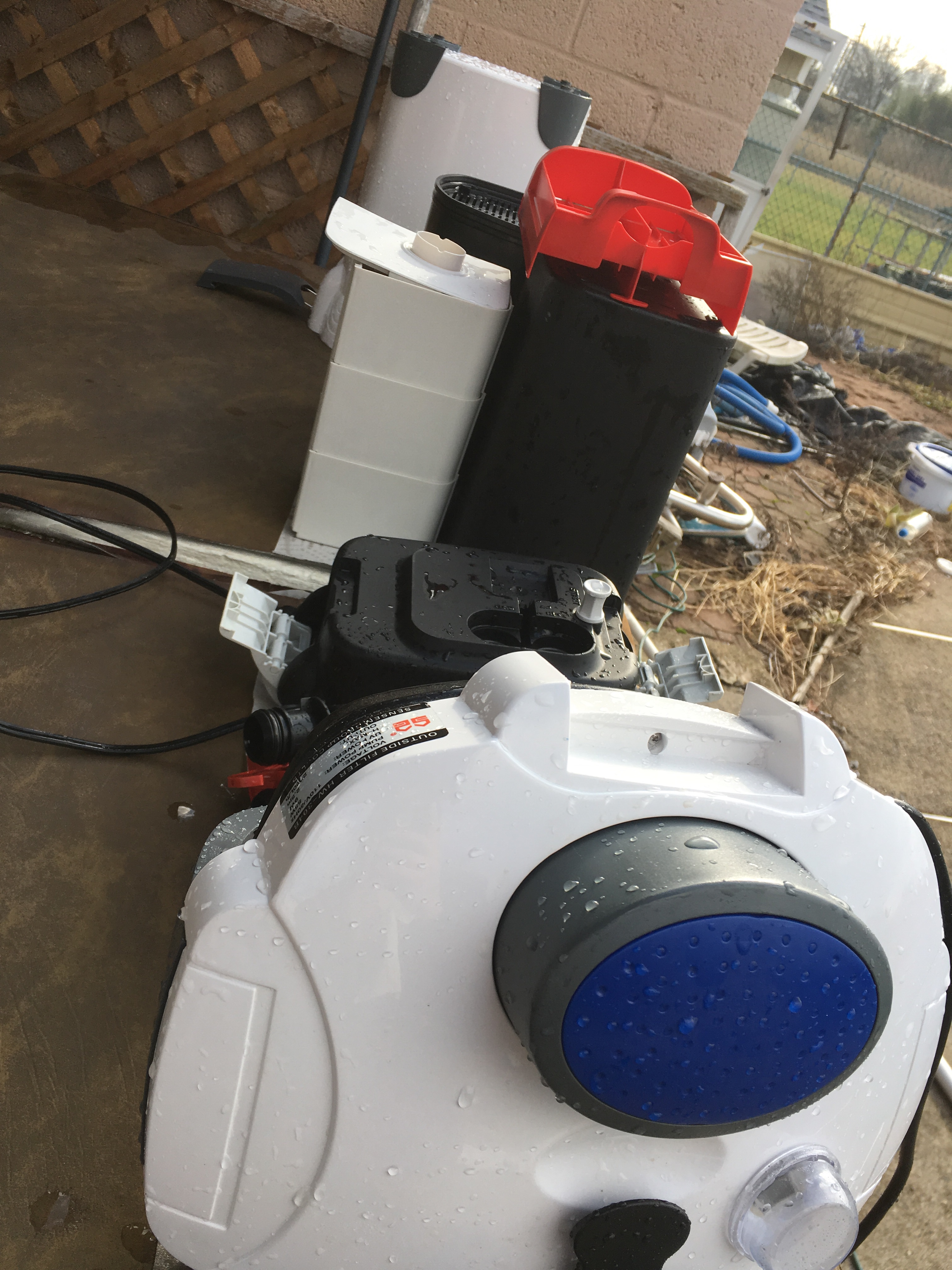
This isn’t a super-exciting post, but I just wanted to write a little progress report for myself. The other weekend, we had unseasonably warm weather for January, and I decided that it was now or never if I was going to get those old turtle tank filters cleaned and sanitized. They’d been sitting with dirty turtle water in them for months (after my turtles’ tanks and filters had been upgraded), festering and growing God know what. There was no way I was putting that toxic sludge into the tub or sink, so I knew I had to do it outside on the patio and rinse everything into the drain there. I used the most powerful setting on the hose nozzle and power-washed the grime out of those suckers, threw away all the consumable filtration media, and bleached the living Hell out of the rest of the parts.

I don’t really know what I’m going to do with them, because most rehabbing turtles don’t need water tanks the way pet turtles do. Their injuries are generally to their shells, which since they’re open wounds means they’re not water-tight anymore and are open to infection and a host of other issues if the turtle were allowed to swim around all the time. I’m hanging onto them, though, just in case. There is a 75-gallon glass aquarium that goes on sale this time of year at the pet store that I’m coveting, even though we have no place for it in this house. If I ever need to move a turtle into something that size, though, I’ll have a filter that can handle it.
I’ve also finally gotten word about the rehab class and test offered by the state. It’s in late March, which is about a month later than usual, I’m told. They sent me the agenda for the day, which includes about an hour of talking about laws as they pertain to rehabbing, but the other 7 hours of the seminar day have nothing to do with turtles. I thought when I was done with school I’d never have to memorize useless information just to pass a test and promptly forget as soon as it’s over ever again. And yet, here I am. At least it’s only one day. Others that have taken it tell me that the test itself is super-easy. It’s the rehabbing itself that’s actually hard.

They did actually give me some study materials pertaining to turtles this time, when they sent out the registration confirmation to me. However, they didn’t give me fact sheets on all the turtle species in CT. They sent me a few, but then I had to go search for them on the DEEP’s website, which I may have mentioned in a previous post, is pretty terribly put together. Nothing is where it would make sense to be. Thankfully, someone added a custom search bar, and I was eventually able to find the species fact sheets that I wanted that way. They still don’t talk about rehabbing those species, but at least they say something about their natural habitats and diets and behaviors. It’s not much, but it’s something. The fact sheet particular to turtle rehabilitation had citations from the 1990s in it, so I conferred with my rehab mentor Pam, who told me that I could safely ignore at least half of what they explained as standard procedure.
Luckily, a few weeks before the test, Pam and the rehabber who taught her are putting on a turtle rehab seminar (which I helped her figure out using google forms to keep track of registration for), so I’ll get to at least see the whole intake procedure and all that stuff start to finish, rather than just the long-term patient care that I’ve been doing up to this point. I’ve also put together a wish-list of things I still need to be ready for turtle season. In a recent conversation with my mentor, I learned of the importance of a hospital/treatment tank and how it’s set up. Turtles can’t immediately be put into a tank with substrate when their shells are still completely raw or they’re currently undergoing treatment/just completed one. They require a tank free of debris/substrate/water, fly-proof (apparently even having turtles indoors attracts flies to the wounds and you can’t have them landing on them and spreading disease), and breathable. Pam said the easiest way to accomplish this is to put a sheet/pillow case/towel over a rubbermaid container. I don’t know how they stay secured on there…maybe giant rubber bands or clamps? I’ll have to ask. I did mention to her that I was trying to get all my supplies prepped before the season began so that I would be actually ready to take on patients, but that I didn’t really know what I would need. I wanted to have a public wish list for my birthday in February, so Pam said she’d try to get the list to me soon (and also that it would force her to make sure it’s ready in time for the early March seminar). Win-win.

If you want to see what I’ve got so far, you can head on over to my How You Can Help page, or go directly to my Amazon wish list.
.

 Turtle Haven
A lot of governmental science information sucks. It’s great that you are proactive.
LikeLike