

This week, I was finally able to get some time with my mentor, because turtle season has officially begun. I practiced hand-watering, giving injections, and assisted with dental work (is it called something different when the patient has a beak instead of teeth?)
Hand-watering is when you have to help the turtles drink. Normally, turtles just drink the water they’re swimming in, but when their shells are broken and not waterproof anymore, you need to help them. The best way to do this is to hold them in one hand and dangle them, head down, at about a 30° angle under running room-temperature water. Using your other hand, make a cup that both catches the water for them to drink from and keeps their legs inside their shell. My mentor Pam demonstrates the technique below.
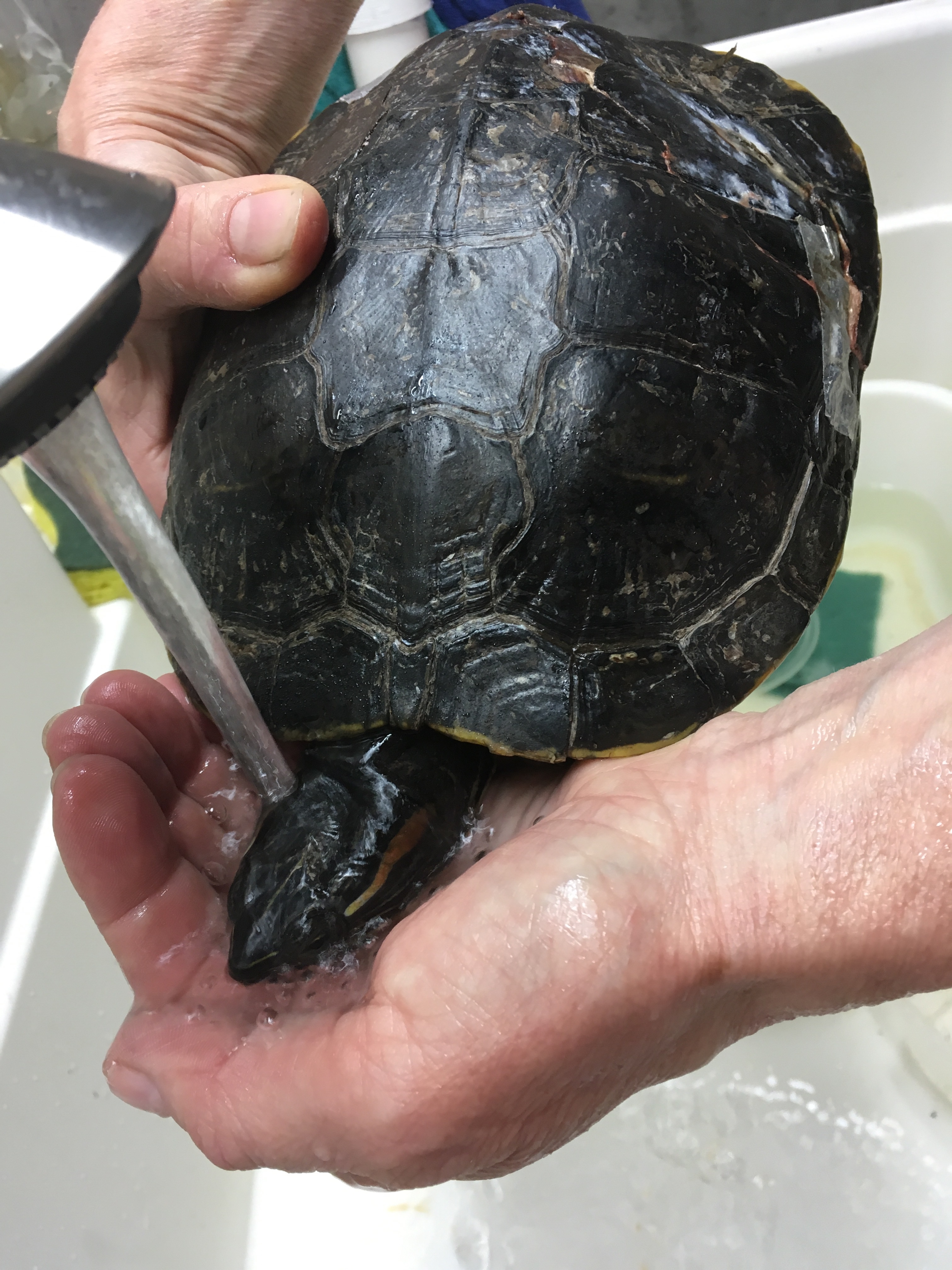
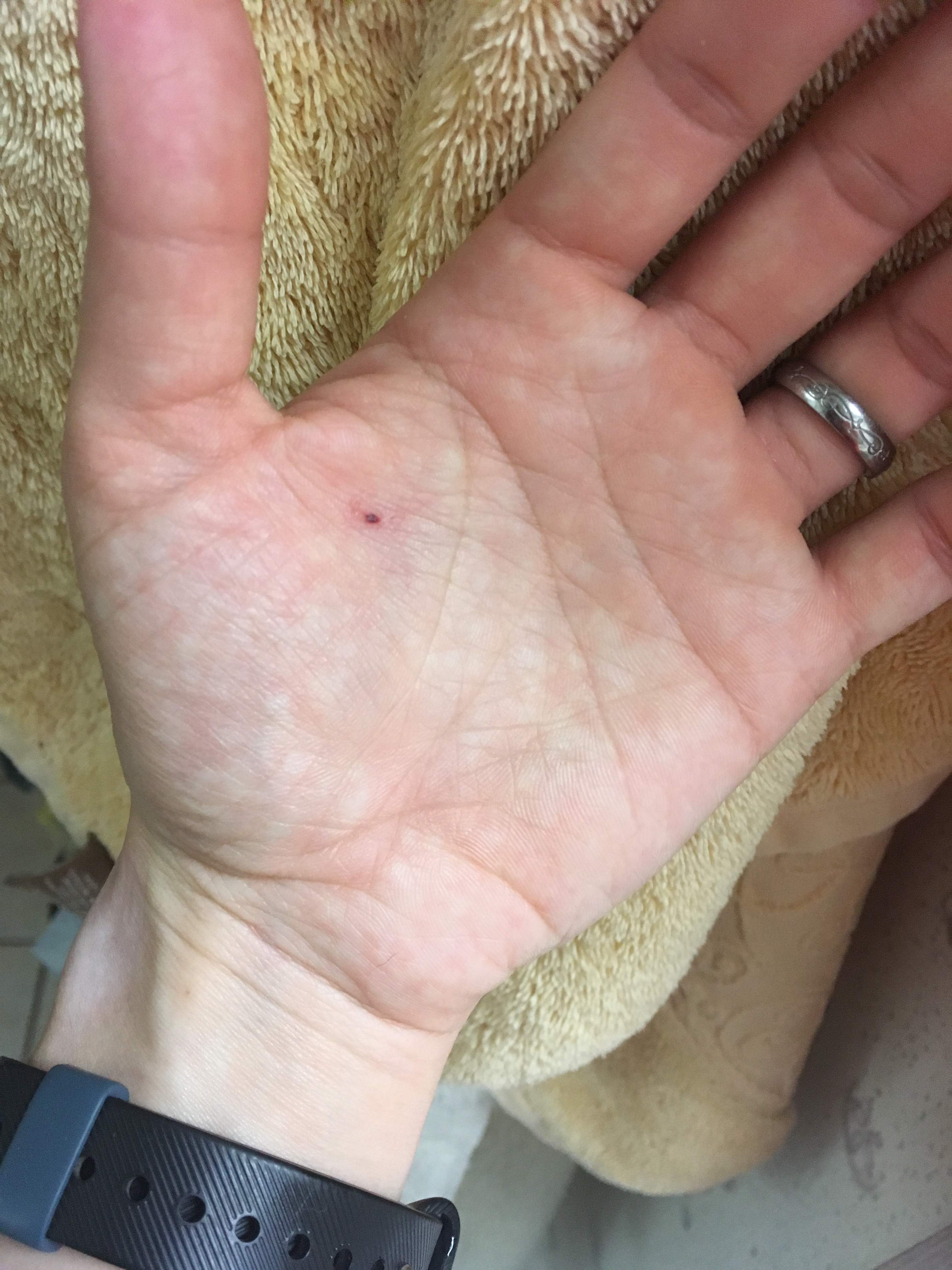
I tried it on a smaller and supposedly very docile turtle. It wasn’t docile that day, though, and not only did it bite me, but it wouldn’t stop trying to claw me, and I don’t think it actually drank anything before both me and my mentor gave up. All that pep is a good sign, because active and alert turtles are healthy turtles. However, if there was some way to communicate to them that we’re not predators and if they would just drink the water please so we don’t have to inject them with fluids to keep them from dehydrating, that would be nice. Thankfully, the bite didn’t break the skin, but I got a little blood blister going on now.
I later tried just using still water in a shallow dish, and it worked beautifully. No running water (kind of wasteful) required, and no bite risk. Just dunk their noses in the water and they figure out how to drink.
I didn’t get any pictures of the other two things I did, because I was too busy watching/doing them, but I’ll try to get some next time.
Two of the patients we worked on today needed antibiotics. First, we had to weigh the turtles to figure out how much to give them. You weigh them in grams, convert to kilograms, then multiply it by 5 (you dose 5mg of baytril per kg of turtle) then multiply it by 0.044 if you are using 2.27% Baytril solution. Pam has all the formulas written out and posted on a little bulletin board right by her workspace so that they’re handy and she doesn’t have to remember all the formulations. For this medication, they need an injection every 3 days.
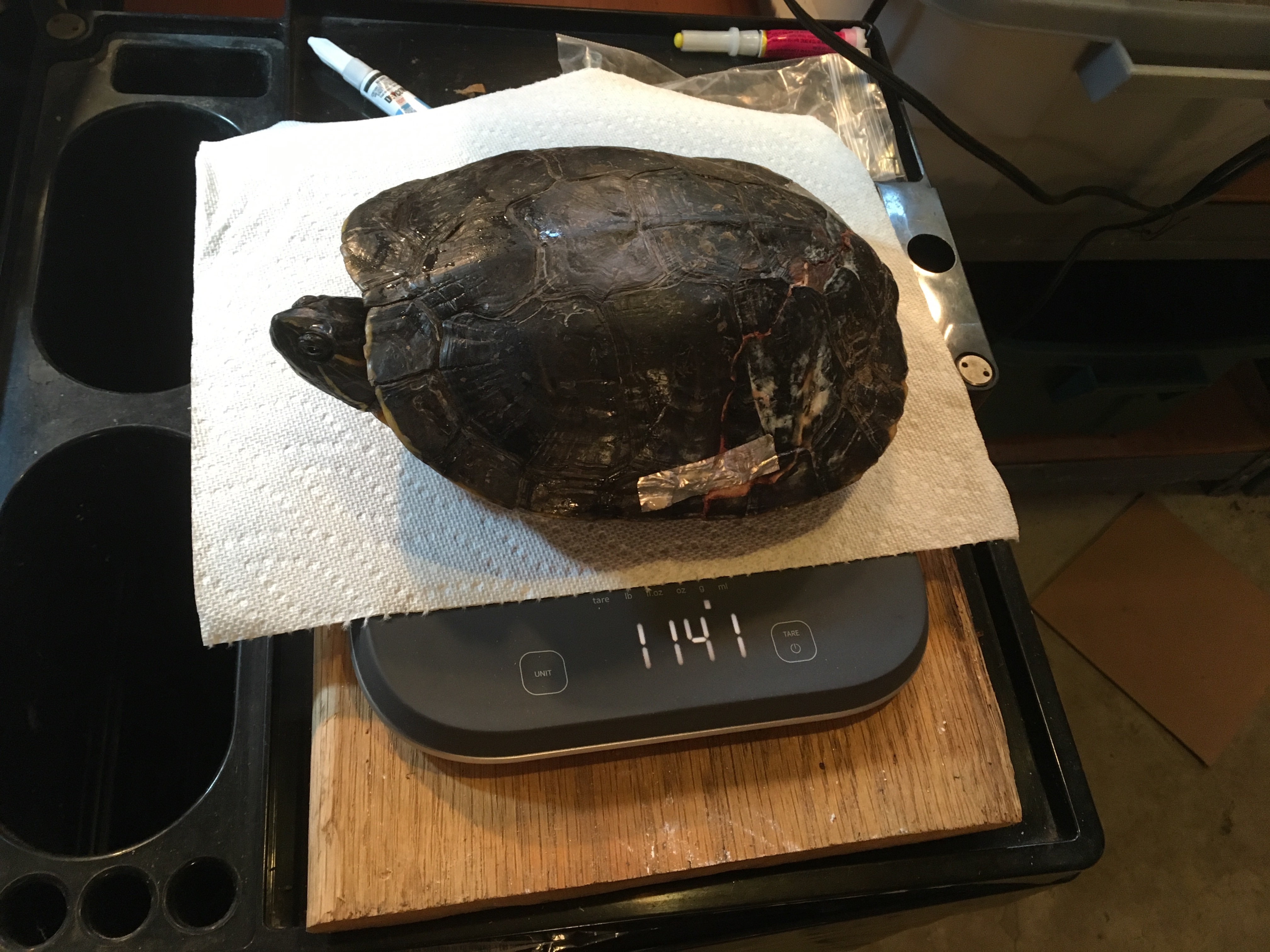
Injections of antibiotics are done subcutaneously, meaning under the skin. I’ve injected my fair share of turtles before, having had them as pets for years and occasionally dealing with them getting sick. However, the vets always told me and showed me to inject intramuscularly, meaning directly into the muscle. Upon doing some digging, this is acceptable, but can cause tissue necrosis (dead tissue) at the injection site over long periods of time. I’ve never really had an issue with that in my pets, but I guess just under the skin is better for them. However, the correct space to inject subcutaneously is a lot smaller than intramuscularly, so it is quite a bit harder. On top of that, I’ve always had someone around to help hold the turtle still and grab its leg while the other person did the actual injecting. Today, Pam showed me a method to hold the turtle in one hand with its leg outstretched and a paper towel over its face so it doesn’t bite, and then use the other hand to inject. The turtle I used this new method on was pretty small, though, and I don’t know how or if I’ll be able to replicate it with a bigger turtle.
Speaking of bigger turtles, the final thing I helped with that day was dental work on a snapping turtle. This is one of the snapping turtles I’d helped force-feed months ago while it was overwintering because its broken jaw was taking a long time to heal and it wouldn’t eat on its own. Well, now it eats on its own, and the beak/jaw is healing, but it is broken in such a way that the top jaw doesn’t close over the bottom jaw the way it needs to if the turtle will be able to fully recover and eat on its own in the wild. The solution to this is to take a dremel tool to the protruding broken part of its lower jaw and basically sand it down until it fits under the upper jaw. A turtle’s beak grows continuously, like human fingernails, and generally, eating and the top part closing repeatedly over the bottom part is enough to ensure proper wear. However, if the mouth doesn’t close correctly, the beak can just grow out and out and out until the turtle can’t close its mouth and can’t eat. So, we needed to take a Dremel to a snapping turtle’s mouth. It was my job to hold the turtle down so it didn’t try to claw or escape, and Pam did the work on its face. We needed all four of our hands for this task, so I didn’t have an extra hand to take a picture. This was another turtle that she swore was very docile the last time she had to do this (you don’t want to do all the work at once), but was very active just then. A good sign for the turtle’s overall health, regardless of the difficulty it causes for the rehabber.


 Turtle Haven