

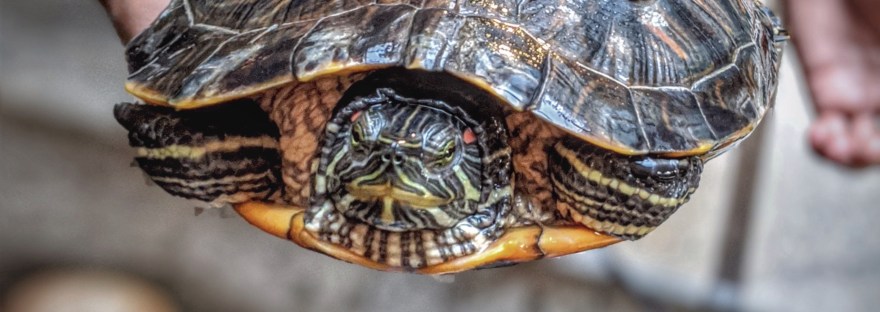
I meant to post this earlier, but then life happened and I didn’t finish in time for National Invasive Species Awareness Week. However, it’s never a bad time to talk about invasive species, and for turtle folks, that means pretty much one thing: red-eared sliders.
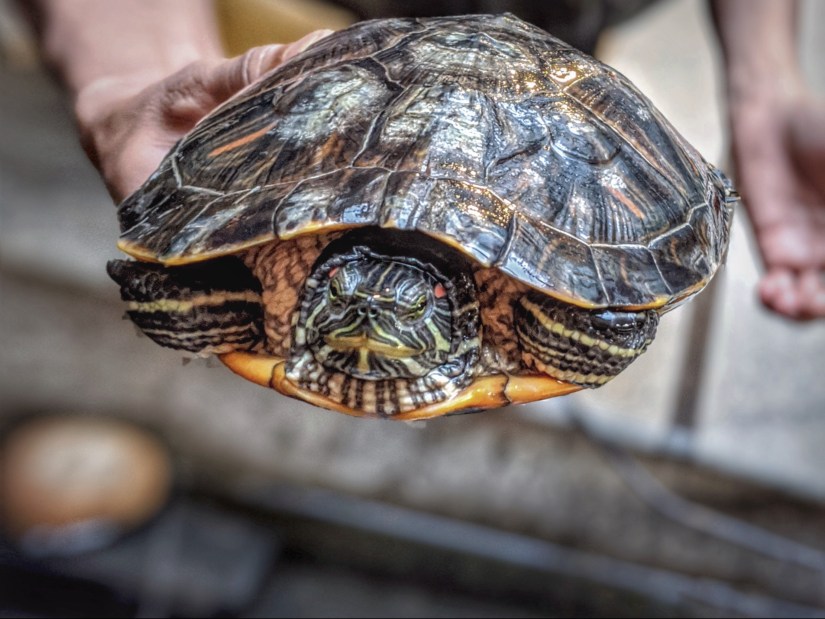
Although the CABI Invasive Species Compendium lists 7 other turtles as potential candidates for invasive species status in certain countries, only the red-eared slider (trachemys scripta elegans) has achieved worldwide domination as being considered invasive on every continent in the world (except for Antarctica which is too cold and too remote for turtles to get there or survive).
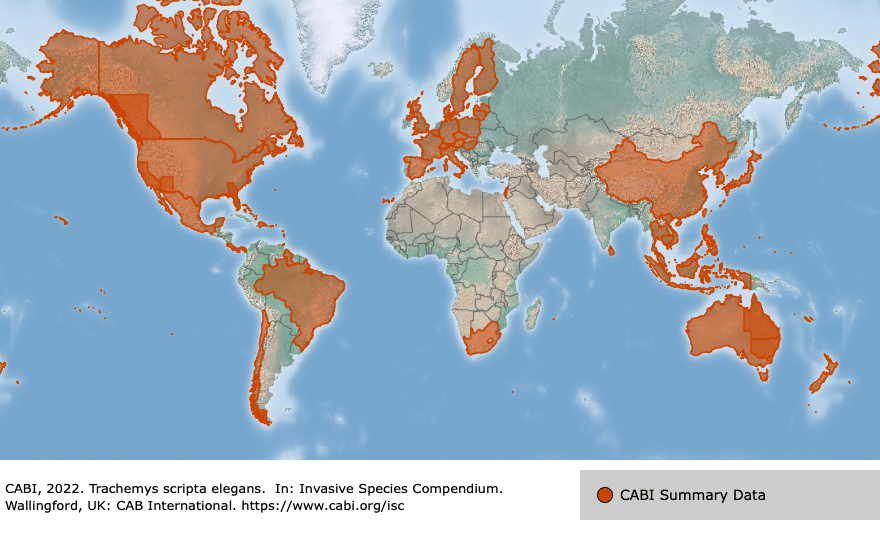
Even North America where it hails from has had enough of RES’ shenanigans. The red-eared slider is only native to a handful of states in the south-central USA and parts of northern Mexico. Many states it doesn’t belong in have enacted legislation to limit the species’ availability to the public/in the pet trade and/or making it illegal to release them into the wild.

People doing just that is how the slider became the global menace it is today. While most other turtle species in the world are in steep decline and in danger of extinction, the RES has adapted to pretty much every habitat it has been dumped into and driven out native turtles, contributing to the decline of many already-vulnerable turtle populations. Biological traits that help the red-eared slider survive in its home range, which it shares with other large river turtles, alligators, crocodiles, and other natural predators and competition are what make it such a threat elsewhere.

While every pet turtle owner will tell you each turtle has their own personality, which is true to an extent, red-eared sliders are naturally more aggressive than many of the native species found in habitats outside its home range. RES also get much larger than many of the turtles that are found in waterways they are dumped in. They are omnivorous and will eat just about anything. They grow big and mature enough to reproduce relatively quickly compared to other turtles. They also have a lot more babies than many other species. All taken together, you have a formidable creature that quickly overwhelms an ecosystem and degrades it.
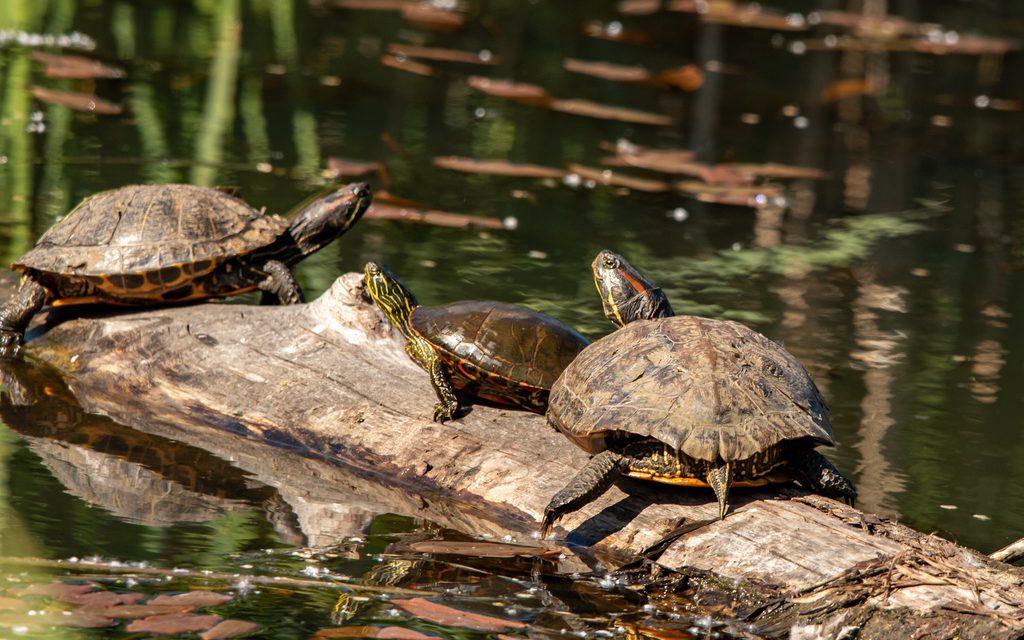
None of this is the turtle’s fault, however. People are the ones who took them from their home range and bred them to be pets and food all over the world, looking to make a quick buck, and then dumped them when they got bored or no longer wanted to spend time/money/space caring for them. People are the ones who abandoned them like so much trash, often after not properly caring for them in the first place, leading to the introduction of diseases into wild turtle populations. People are the ones who bought tiny, adorable turtles without doing any research into how big they would get, how long they would live, or how much care they would need. People are the ones who also did not do any research before deciding that “letting it go” was a good idea when they realized that finding a new home for their once-beloved pet would be harder than they thought because everyone and their brother also don’t want to make an effort to care for an animal anymore.
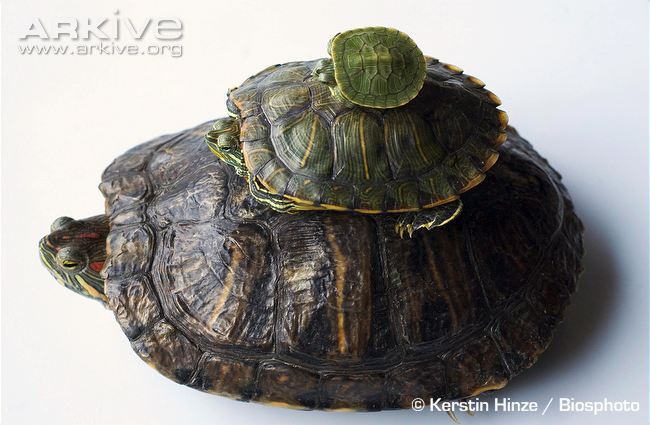
The turtle is just doing what comes naturally, trying to survive. And in its home habitat range, there are natural checks and balances in place that have evolved over millennia to make sure that no one animal becomes too dominant. When you take that away, you end up with an animal that is listed in the “World’s Top 100 Most Invasive Species”, the only turtle to make the list.

If you’re thinking about getting a turtle for a pet, don’t buy one from a store or in a street market or online because it is little and cute. Adopt an adult turtle in need of a home. They’ll still provide you decades of companionship, and you won’t be contributing to the problem of turtles being seen as disposable pets. Besides, if you plan on actually being a good caretaker, you’ll eventually need the bigger setup to fit an adult anyway, so why not save money and just go big from the get-go with both setup and turtle, instead of starting small and having to keep paying for upgrades? Red-eared sliders aren’t the only pet turtle species available, but they are often the cheapest and easiest to find. If you don’t want a slider because it gets too big, don’t buy anything from a pet store (no matter what they tell you). They’ve replaced sliders with map turtles, cooters, and other non-native turtles with similar traits as RES, because sliders are not allowed to be sold in increasing numbers of places. So, they replace them with a different species that can be produced cheaply because they naturally grow big fast and lay lots of eggs. Or, possibly worse, they replace them with species that are taken out of the wild in droves instead of bred for the pet industry, which has untold effects on the ecosystem the animal is being taken from as well as often being bad for the health of the animal itself. Animals born in the wild are used to being wild and captivity stresses them out terribly, which in and of itself can cause illness, in addition to many people not successfully recreating a wild habitat and causing more health problems with improper care.
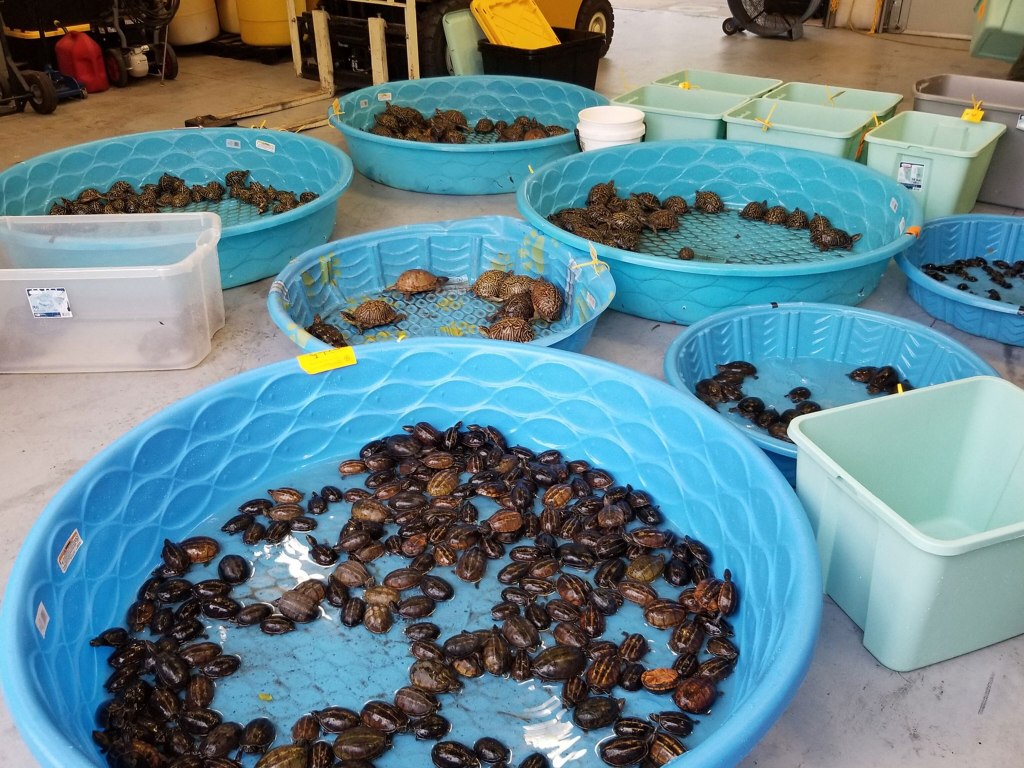
Have you ever wondered why you only see turtles over a certain size in reputable pet stores, but you can find quarter-sized hatchlings in flea markets, online, and other places known to flaunt the law? It’s because it’s actually illegal in the USA to buy pet turtles which are under 4 inches long, and it has been since 1975. You see, back then, there were no regulations on selling pet turtles, and pretty much every store had some that you could buy very cheaply as tiny babies. Almost all of these baby turtles were red-eared slider species. Most people knew very little about taking care of them, and the turtles inevitably died in a few months. So, they were seen as a cheap, disposable pet for a kid to play with until they got bored of it, instead of a 40-plus-year commitment to a living, feeling organism. Those that did survive quickly outgrew the crappy plastic bowl they came in and many people didn’t want to bother with figuring out how to obtain a bigger, more suitable home for them, and instead just released them into the nearest pond or stream. This happened in such numbers that populations quickly became established all over the place, and in a matter of a couple decades, red-eared sliders were becoming invasive just about everywhere they were sold. What does this have to do with the 4-inch law? Surprisingly, not a whole lot.
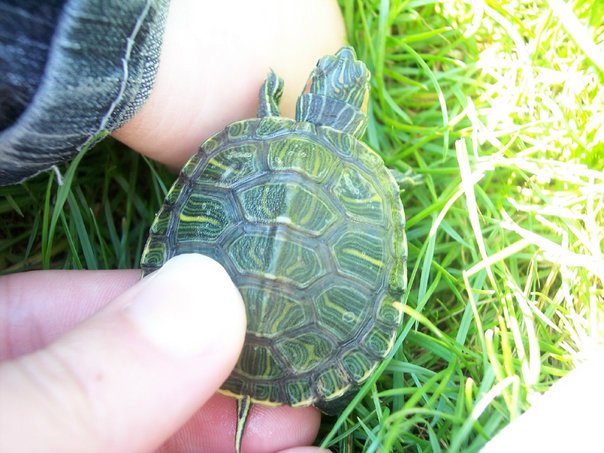
The law was put into place in an attempt to protect stupid people from themselves. Cases of salmonella poisoning in children were skyrocketing during this baby turtle craze (so the story goes), and instead of teaching people to wash their hands after handling an animal that poops where it swims, or, *gasp* actually monitoring their offspring to make sure they weren’t sticking the damn thing in their mouths, kissing them, or playing with them and then sucking their thumbs or rubbing their eyes or eating…the good folks of the ‘70s just banned the selling of turtles under 4” long. There is no real rationale behind that number. Salmonella doesn’t magically disappear from a turtle’s digestive tract after it reaches a certain age/size. They just hoped that bigger turtles would be less appealing to children, and that kids would thus be less likely to beg their parents to buy one on a whim. Parents would also see an animal that needed a living space bigger than a shoebox and turn down buying their darlings a pet turtle more often. It seems to have done the trick, because salmonella poisoning in children from turtles is quite rare these days.
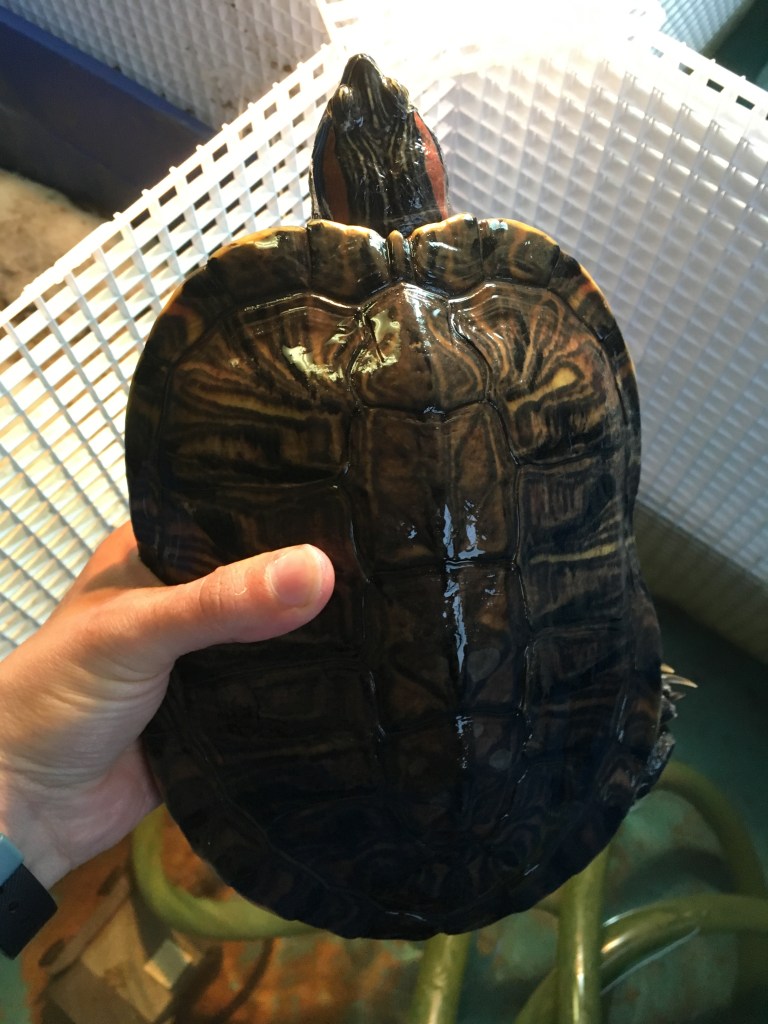
However, an unforeseen consequence of the 4-inch law was the reinforcement of sliders being the pet industry’s species of choice for decades. They only take a year or two to get to sellable size, compared to other turtle species that are the legal 4-inch size their whole adult lives and stay that way. Turtles that max out at 4-6 inches are going to take many more years to get that big than turtles who pass that mark as juveniles and continue growing. They also tend to lay fewer eggs because they can only fit so many into their smaller bodies. If you’re breeding turtles to sell, you want to get the most bang for your buck, meaning you want to spend as little time as possible putting money into caring for animals that you can’t sell because they’re too small. Ergo, you need a species that gets big fast, makes lots of babies at once, and bonus if it’s hardy and not at all picky about what it eats and can tolerate a range of living conditions. Hmm…sounds like sliders check every box. Breeders by and large don’t give a rat’s ass what happens to the turtle after they get their money. What do they care if people are getting bored with their product after a few years and letting them go into the environment? It’s not like they are required to come with a money-back guarantee. What happens after they get their return on investment for the turtles they sell is not something most breeders care about. If it were, we wouldn’t be having the problems with red-eared sliders that we have today. There would be some kind of system in place to handle the sadly inevitable overflow of unwanted pets.
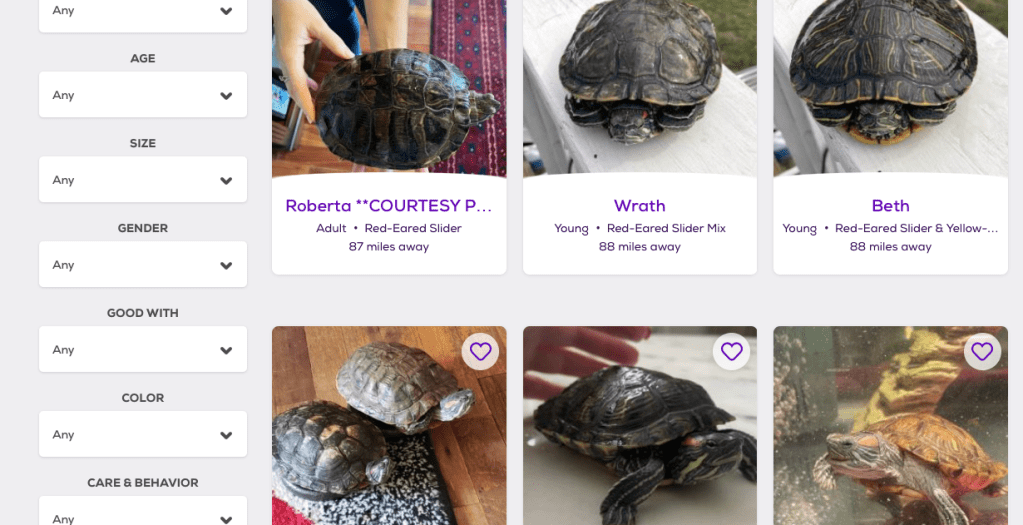
Instead, you’re left with the very few shelters and rescues that actually accept turtles in general and red-eared sliders in particular being overwhelmed with requests from people who didn’t plan properly when they decided to bring another life into their home. You’re left with rehabbers, zoos, and nature centers getting constant requests for people to rehome their unwanted pets, which in general is not their mission and which they don’t have the space for anyway. You’re left with a haphazard assortment of pet rehoming websites having varying degrees of credibility. You’re left with people getting mad at you for not cleaning up their messes. I’ve gotten legitimate hate mail from people when I told them I couldn’t take their unwanted pets. Can you imagine being that mean and selfish?

Red-eared sliders are the pit-bulls of the pet turtle world. Big, beautiful, strong, misunderstood, often mistreated or abandoned, hard to find homes for, and only a problem because of human interference.
There are three main things to take away from this post:
1). Never release an unwanted pet into the wild (if you stole it from the wild in the first place, contact a rehabber first).
2). Plan properly for a lifetime commitment when you get a new pet. There are some great care sheets for RES here, here, and here.
3). Adopt, don’t shop, and don’t steal native species from the wild. Here’s my list of current adoptable pet turtles, and any of the organizations listed here on my website as possibly accepting pet RES would be thrilled if you could take one off their hands instead.

 Turtle Haven
Fascination but sad to read this and I truly wish I could take Sheldon but the yellow belly slider slider I accidentally adopted last Aug already takes up a 1/4 of my living room – lol. 🙂 She is doing great by the way and thank you again for your advice when she first landed in my lap. Best wishes to you always!! Suzanne & Toni turtle
LikeLiked by 1 person
great for my school work i have caught one they are huge
LikeLike