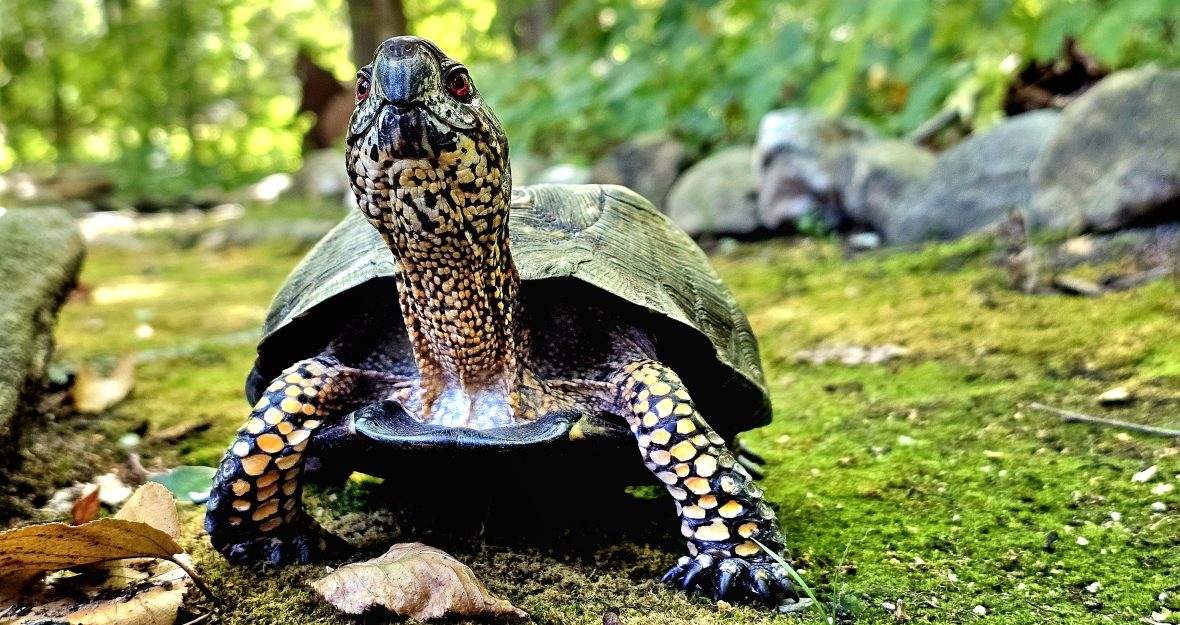
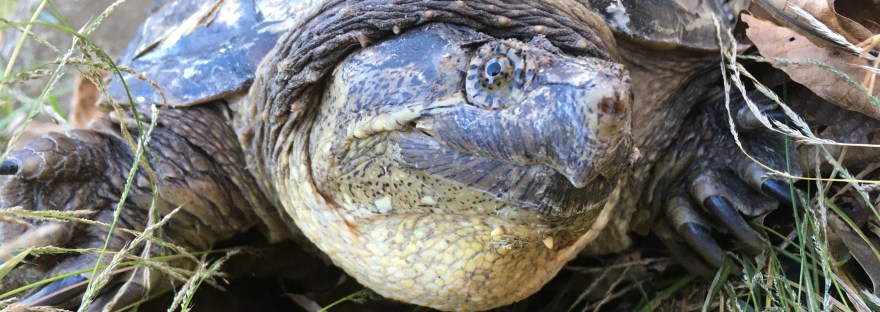
Claude, as named by the finders because he “clawed” his way into their garden (and their hearts) after getting hit by a car this summer, has entered today into a world with no more pain.

A young adult male, only about 8 1/2 pounds, he should have had decades of life left to live. A combination of factors led to his untimely death, but the start of his troubles was getting hit by a car. Whoever it was that hit him didn’t stop, and the turtle kept walking until he hit a wall and couldn’t walk any further. This is where the kind people who found him hanging out in their garden came along, and brought him to me.
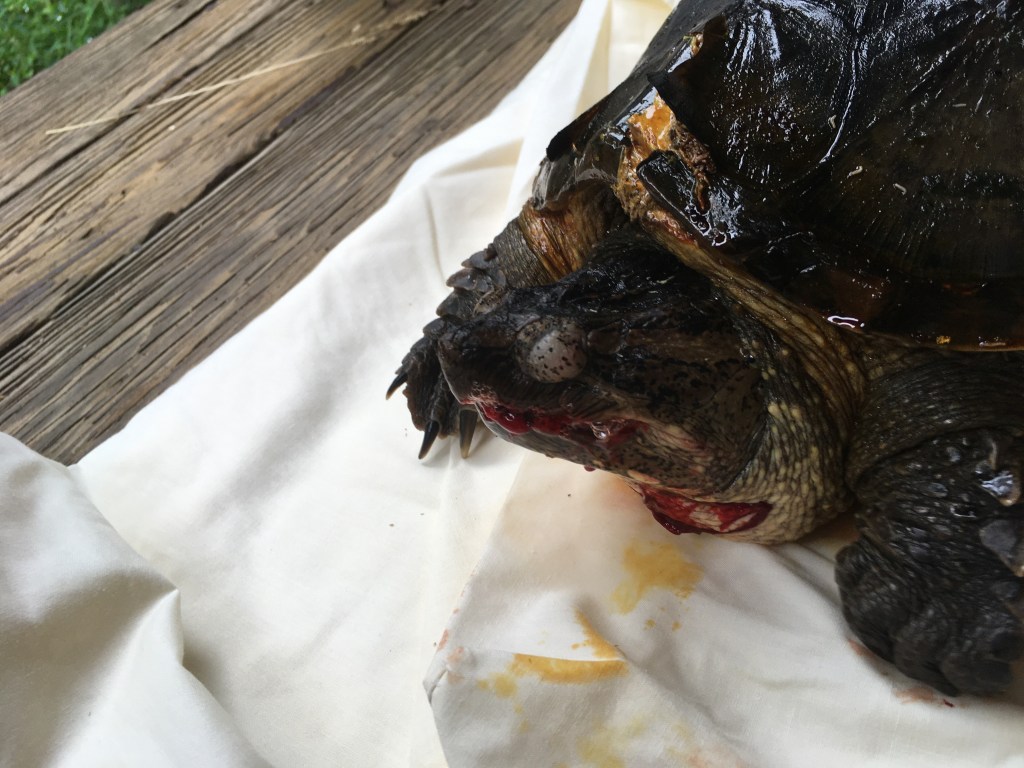
When he came in, his wounds were deep and festering with maggots. It took forever to finally get them clean and I wasn’t sure if the crack on the back of his shell had affected his spine.

Despite this, he still had some spirit. Several weeks go by and he seems to be doing better. He snaps at anything that moves, and several things that don’t, like the side of his tank. I decide he has too much personality for a single name so I start referring to him as Claude Magnus (meaning “Claude the Great”).
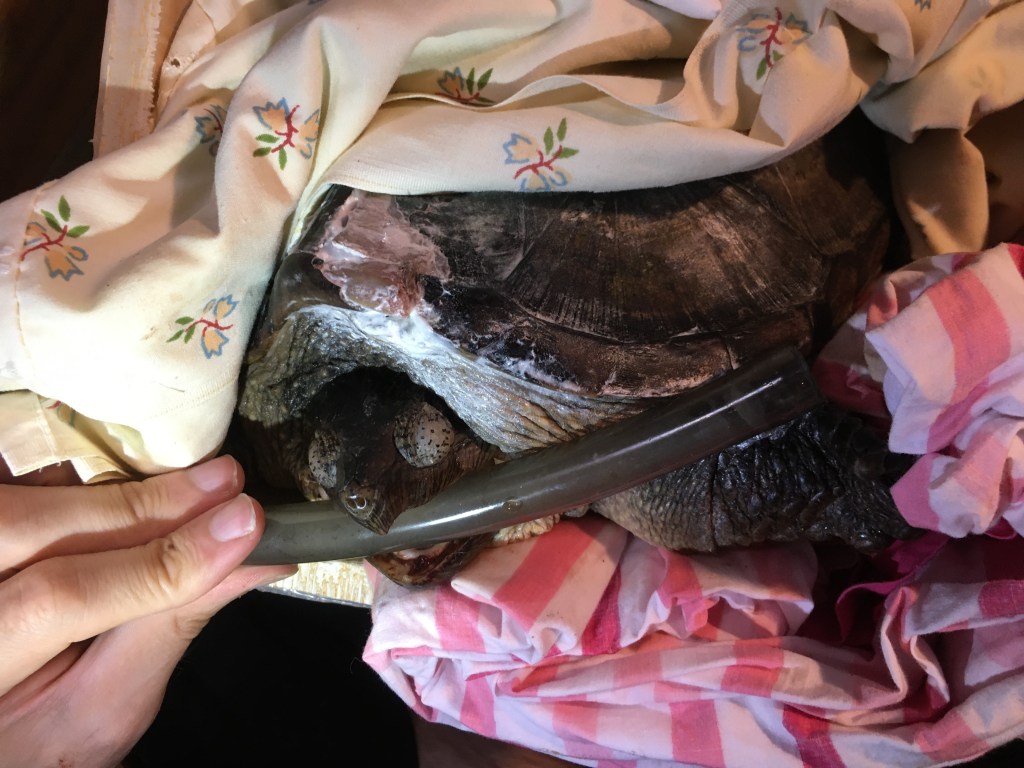
For a while things are fine and he seems like he is starting to get better. He is restless since day 1 despite being half-dead upon arrival, and the more he heals, the worse it gets. A bigger tank and more water don’t help him, and he is constantly trying to climb up and get out, often falling and landing flat on his back (which is where his injuries are, and he keeps busting his wound closures). I often hear flailing and splashing from the other room and come in to find him trying to right himself on the bottom of his tank.
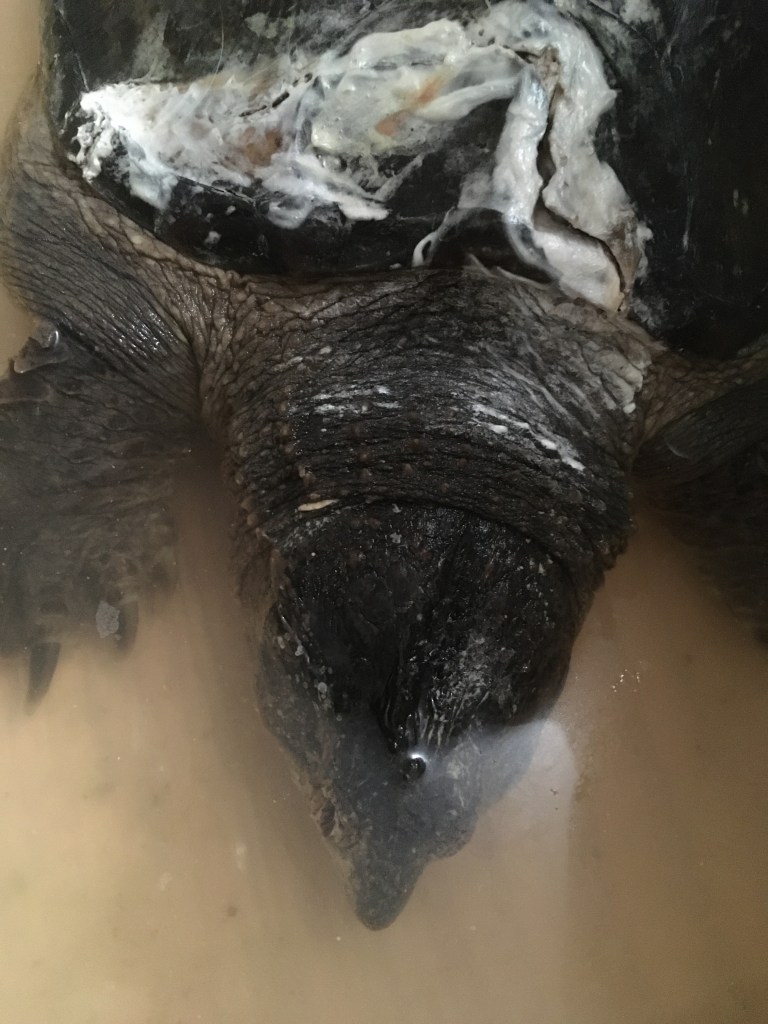
On one such occasion, I put him back right-side up, and his neck is suddenly crooked to the side. I think maybe he landed on his head or snapped too hard at the side of his tank and gave himself a concussion, because head-tilting is what my other head-trauma patients do. There’s not much you can do for head trauma besides wait and see if it improves. Sometimes head-tilt is a sign of respiratory infection, but given its sudden onset after active injury and lack of any other respiratory symptoms, it seems highly unlikely. I treat him for it anyway, because I might as well rule it out.
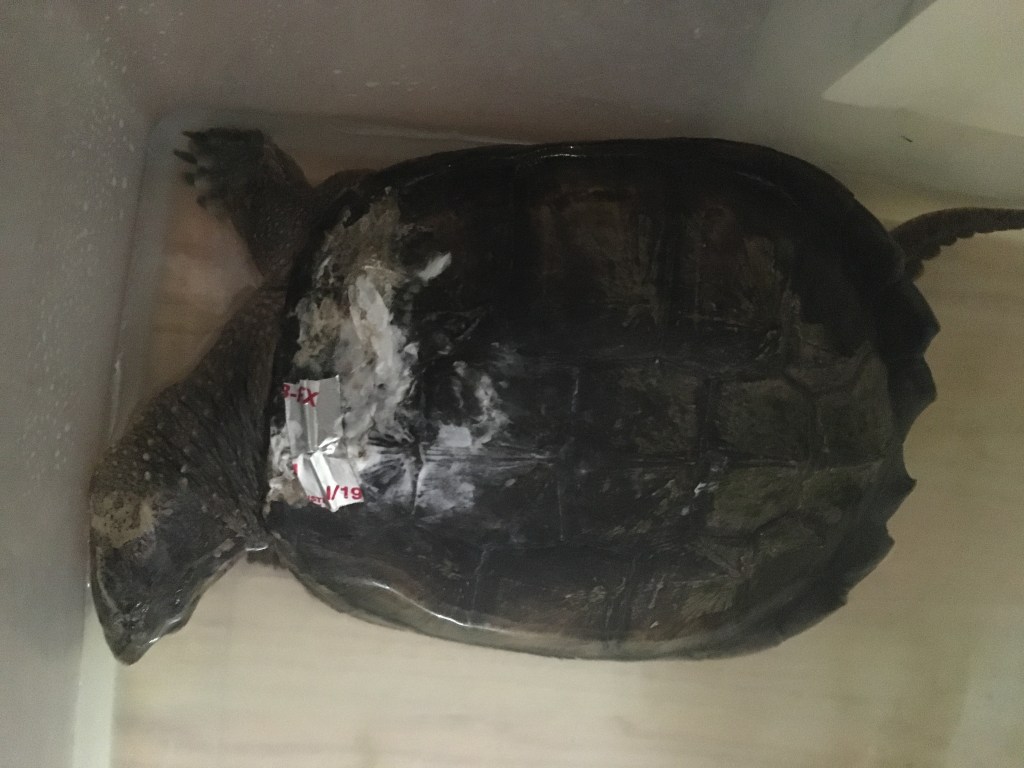
More time passes, and he starts going downhill, despite parts of his shell starting to heal. Claude Magnus starts getting slow, not showing interest in food, not even trying to snap at me when I pick him up. I examine him more closely and it appears he isn’t snapping anymore because he physically can’t. I bring him to the vet for x-rays and discover he has a broken and very dislocated collarbone.
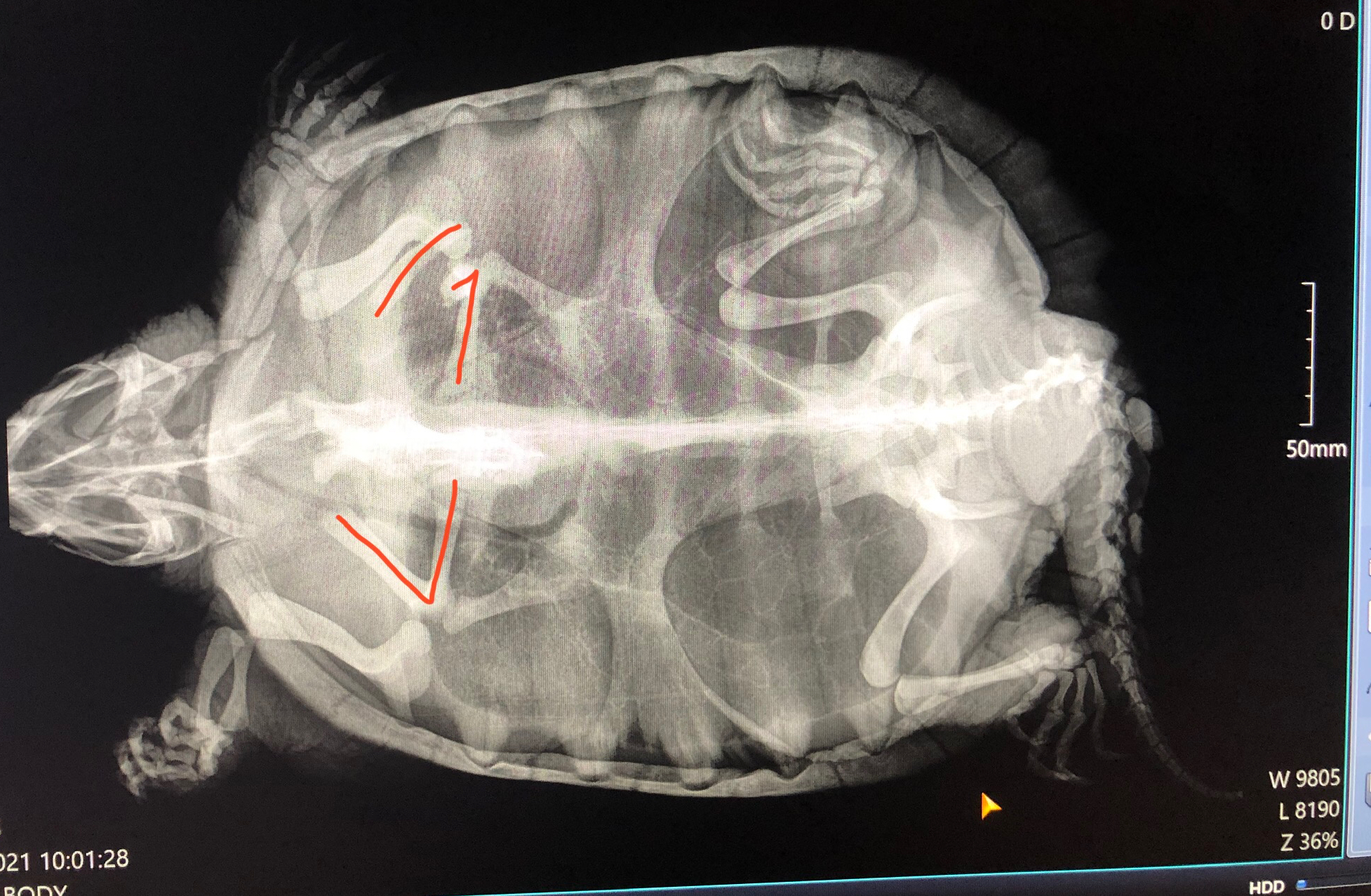
Now, turtles are pretty tough and just falling shouldn’t have broken his bone. It’s likely that it was broken by the car that hit him, but that his constant escape attempts and landing directly on the fracture pushed it out of position. I consulted three different vets who all basically told me the same thing. “There’s not much hope for him.”
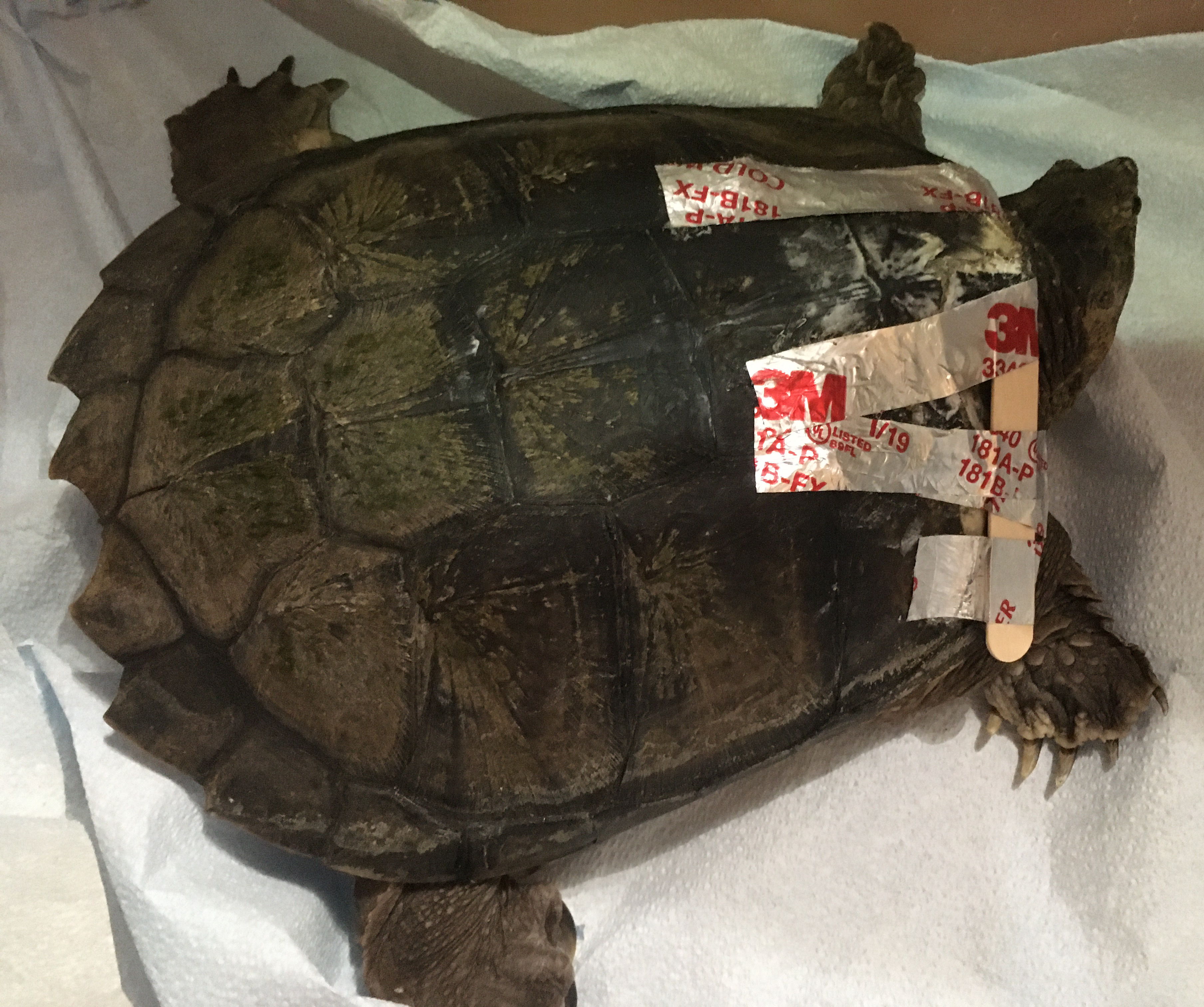
A snapping turtle who can’t extend his neck because a dislocated and fractured bone is in the way, who has decreasing strength in one arm and lowered ability to swim, who can’t even open his mouth all the way anymore, isn’t going to survive in the wild. The poor thing couldn’t eat on his own and it was unlikely even surgery would be enough to fix his internal injuries. Keeping him alive by force-feeding him and in shallow water because he couldn’t extend his neck very far nor swim very well in order to breathe is no way for this majestic dinosaur to live out the next 6 or 7 decades of his natural life.
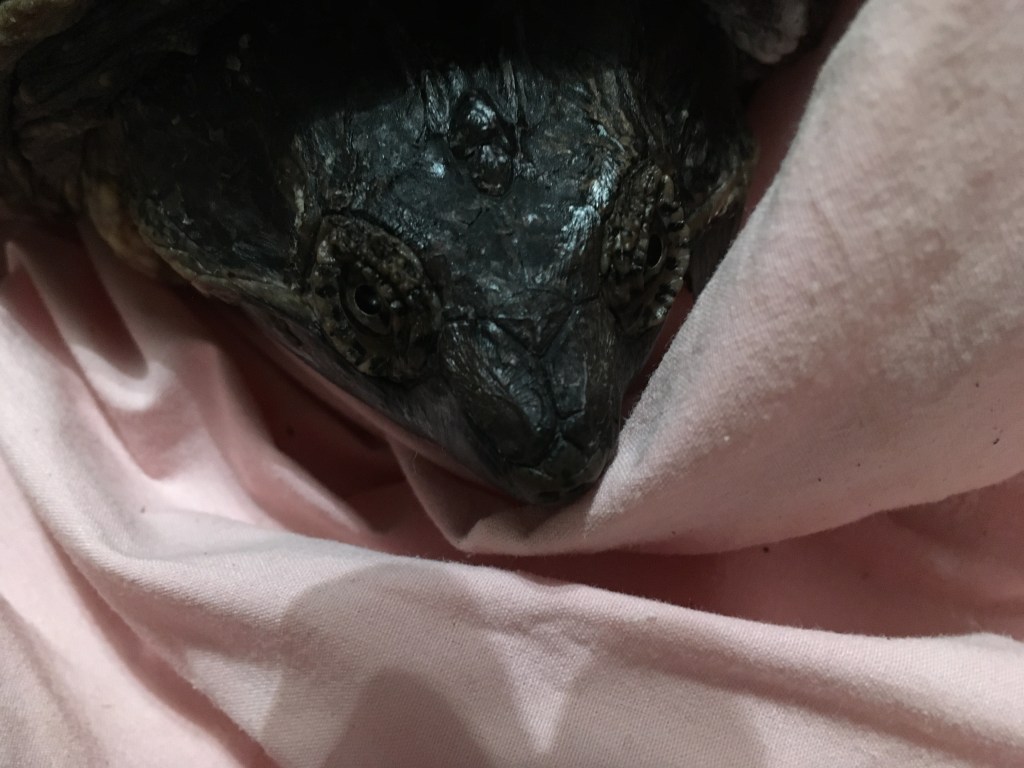
So, I did the most humane thing to do for him in this situation and ended his suffering. I brought him to a vet for humane euthanasia. Claude Magnus has gone to sleep and shall never wake up again.
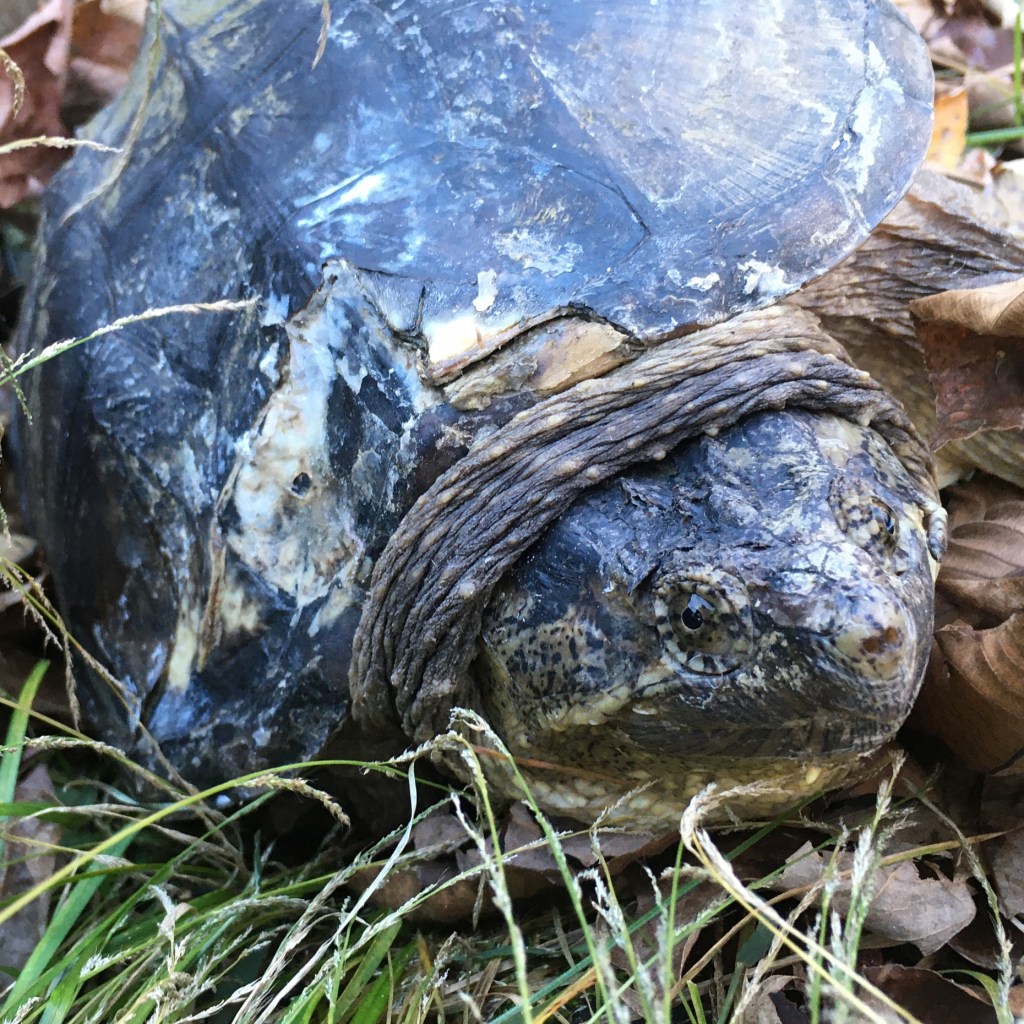
It’s easy to blame the turtle, because if he had just stayed still and rested then his bones and shell would have healed and he could have been back home by springtime. But the reality is that some wildlife patients just don’t do well in captivity, even when they are getting the best care. Their instincts are telling them to run, to fight, to escape. These instincts work well for healthy animals in a natural setting, but not so much for patients with critical injuries. There’s no way to tell them that we’re here to help. There’s no way to tell them to be calm and that things will get better. None of his natural behaviors that led to his compounding his injuries were preventable.
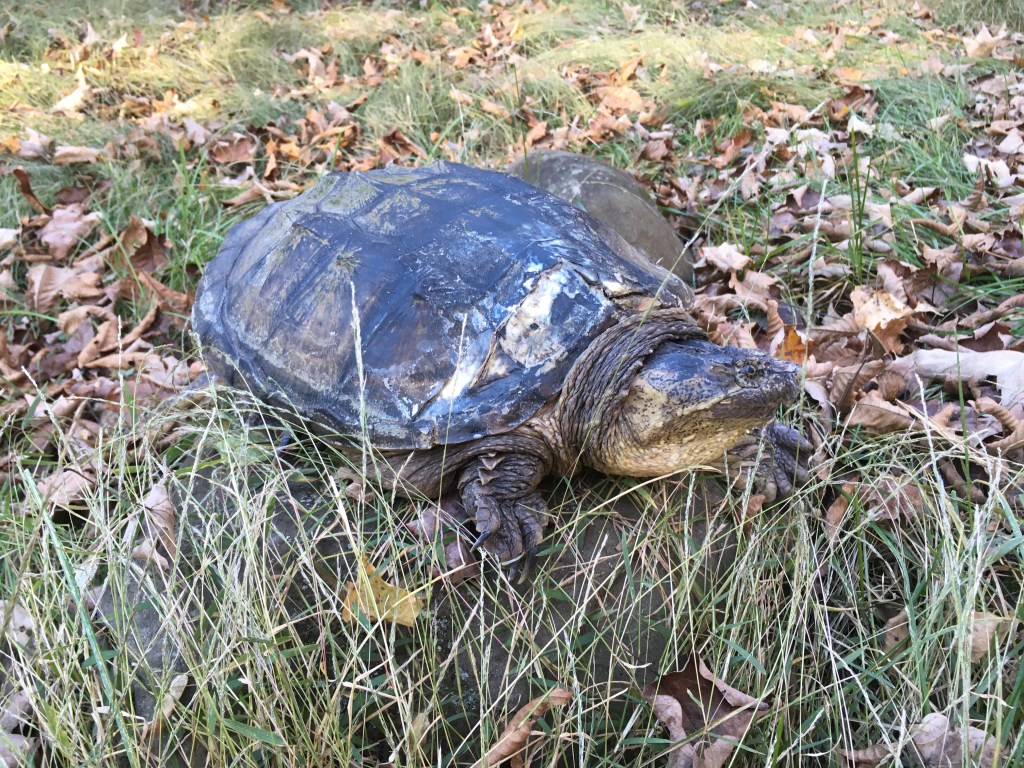
What was preventable, though, was getting hit by a car in the first place. 99% of the time, the person who hit the turtle is not the one who brings them in. They are just in too much of a rush and/or not paying attention to notice a big lump in the road that they ought to avoid. They don’t care enough to stop and check on the animal that they just ran over to see if it needs help. Whatever consequences their actions have, they are unaffected.
Drive slowly in wooded/natural areas, watch the road for animals, especially in the warmer months, and always stop to check on turtles on the side of the road. Even if they are not injured, if you help them cross in the direction they are going, you are rescuing them from getting hit by a car after you drive off.
If you ever hit a turtle with your car, there’s a good chance it is survivable, especially if you get help right away. Keep a plastic bin with locking lid, an old towel/blanket you don’t care about never seeing again, and thick gardening gloves in your trunk at all times. This roadside rescue toolkit will help you safely contain an injured animal you may find on the side of the road, and being able to pick it up right away and bring it to a rehabber ASAP can easily save an animal’s life.

 Turtle Haven
I am so sorry for your loss Angelina – thank you for the suggestion of a turtle rescue kit in the car – I think I will do that starting in the spring.
Hope you are well … Toni the yellow belly slider is doing just fine. 😊
Suzanne
LikeLike