
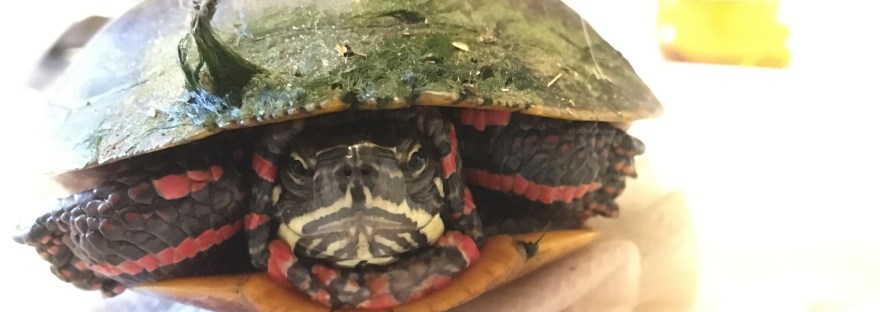
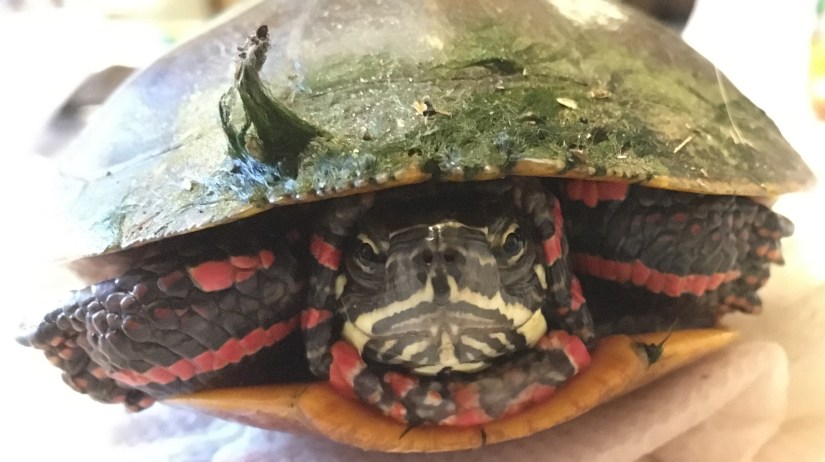
Ever hear of a vampire turtle? This little guy is ready for Halloween all year round! If you look closely, you’ll see two fang-like protrusions on his upper beak. They’re not actually fangs, but part of the shape of the beak, which is made of a keratin layer (the same as your fingernails) over the jaw bone. The scientific name for these little fangs is, “tomiodonts”. The word comes from the Greek “tomy”, meaning “sharp, cutting”, and “dont”, meaning “tooth”.
Scientists are still studying this phenomenon in turtles and don’t know for sure yet how they develop, nor what they’re for, though theories abound. Some scientists think that they are grown out that way, while others think that softer areas are worn away over time to reveal the harder fang-shaped tomiodonts.
Some theorize that they are used for handling and gripping soft-bodied prey like fish, while others think that they are used to cut through tough vegetation. Many turtles are omnivores, so it could be both. According to scientists, a combination of triangular blades and an acute notch generate the greatest bite force with the least amount of work and reduce level of strain exerted.
Some theorize that since tomiodonts are much more common and more pronounced in adult males (except very old ones where they may have been worn away over time), that they are used somehow in mating. One use might be to help them hold on, while another might be “love bites” which are common in pre-mating rituals for many turtle species. Males’ long front claws in many species are also used in mating.
If you want to read more from the scientific literature about tomiodonts, check out this link:

 Turtle Haven